An EZ curl bar weighs between 10 and 35 pounds, depending on the type. A standard home-gym EZ bar weighs 10 to 15 lbs, while the Olympic version found in most commercial gyms weighs 15 to 25 lbs, with 20 lbs being the most common weight.
If you train with an EZ bar, you need to know its exact weight. Skipping this step throws off your tracked numbers and makes progressive overload harder to measure accurately. A lot of lifters just add plates and log the total, forgetting the bar itself can add anywhere from 10 to 35 lbs to the lift. That gap matters over months of training data.
So how much does an EZ bar weigh in your specific gym? It depends on the type sitting on the rack. Home gyms usually stock the lighter Standard version, while commercial gyms like LA Fitness or Gold’s Gym stock the heavier Olympic or Rackable versions. Below is a quick breakdown by type.
Quick Reference: EZ Bar Weight by Type
| EZ Bar Type | Weight (lbs) | Weight (kg) | Common Setting |
| Standard EZ Bar | 10–15 lbs | 4.5–6.8 kg | Home gyms |
| Olympic EZ Bar | 15–25 lbs | 6.8–11.3 kg | Commercial gyms |
| Super EZ Bar | 17–25 lbs | 7.7–11.3 kg | Commercial gyms |
| Rackable EZ Bar | 30–35 lbs | 13.6–15.9 kg | Power racks |
| Cable Curl Attachment | 5–8 lbs | 2.3–3.6 kg | Cable stations |
Not sure which one you’re using? The next section breaks down how to tell them apart just by looking at the sleeves.
Standard vs. Olympic EZ Curl Bars
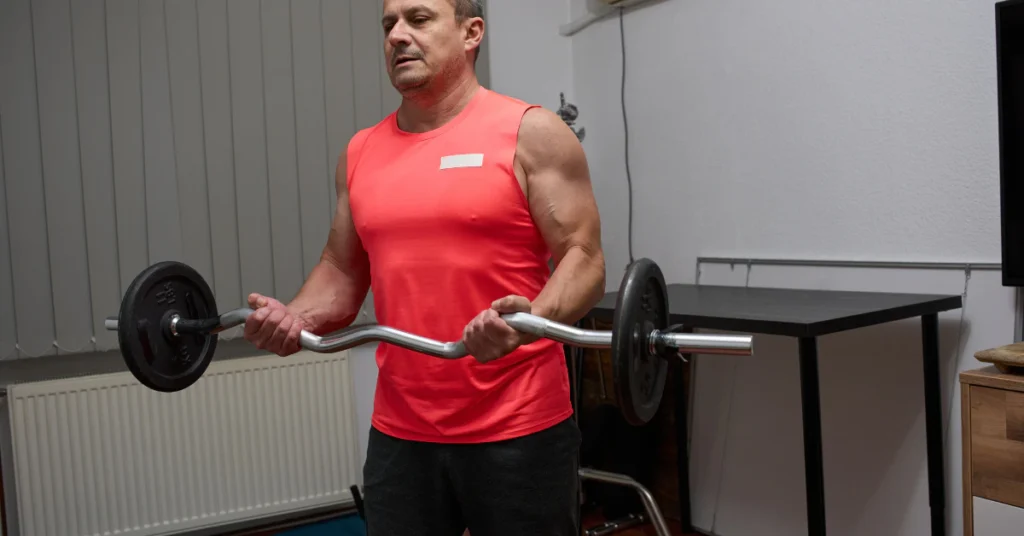
The biggest difference between these two bars comes down to the sleeves, the parts where you load plates. This single detail changes the weight, the feel, and where you’ll find each bar.
Standard EZ Curl Bar Weight (10–15 lbs)
The Standard EZ curl bar is the lighter, more basic version. It’s common in home gyms and budget fitness setups because it’s cheaper to manufacture.
Here’s what sets it apart:
- Sleeve diameter: 1 inch thick, built for standard weight plates (the kind with a small center hole)
- Rotation: The sleeves are fixed and do not spin independently from the bar
- Weight range: 10 to 15 lbs, with most landing close to 10 lbs
- Build quality: Usually lighter-gauge steel, which keeps manufacturing costs down
- Where you’ll find it: Garage gyms, basement setups, and entry-level home gym packages
Because the sleeves don’t rotate, your wrists absorb more torque during the curl. This isn’t dangerous, but it does change how the bar feels under load compared to a gym-standard bar. If you’ve ever asked why does my home EZ bar feel lighter than the one at LA Fitness, this is usually the answer. You’re likely comparing a 10-lb Standard bar to a 20-lb Olympic bar without realizing it.
Olympic EZ Curl Bar Weight (15–25 lbs)
The Olympic EZ curl bar is what you’ll find at nearly every commercial gym in the USA, including LA Fitness, Gold’s Gym, and Planet Fitness. It’s built heavier and designed to handle more frequent, higher-load use.
Key features:
- Sleeve diameter: 2 inches thick, built for Olympic plates (the kind with a large center hole)
- Rotation: The sleeves spin independently on bearings or bushings, reducing wrist strain during the lift
- Weight range: 15 to 25 lbs, with 20 lbs being the industry average
- Build quality: Heavier-gauge steel with a thicker knurled grip
- Where you’ll find it: Commercial gyms, university weight rooms, and serious home gym setups
The rotating sleeves make a real difference in how the bar handles weight. As the plates spin slightly during the curl, your wrist doesn’t have to fight the bar’s torque the same way it does on a Standard bar. This is part of why Olympic EZ bars are the preferred choice for lifters tracking serious strength progress.
If you’re logging workouts in an app and your gym doesn’t have the weight printed on the bar, assume Olympic at 20 lbs unless you can confirm otherwise. Most commercial gym chains in the USA stock Olympic-spec equipment, and brands like Rogue Fitness build their curl bars to this exact standard.
One quick way to check: grab the sleeve (not the handle) and try to spin it by hand. If it rotates freely, you’re using an Olympic bar. If it’s locked in place, it’s a Standard bar. This takes five seconds and removes the guesswork completely.
The weight difference between these two types, sometimes a full 10 to 15 lbs, is significant enough to throw off your tracked totals if you switch gyms or train at home and commercially. Always check which type you’re using before logging your lift.
How Much Does a Super EZ Bar Weigh?

The Super EZ curl bar is a variation on the standard design, built with deeper, more pronounced bends in the bar. Where a regular EZ bar has gentle curves, a Super EZ bar’s bends are sharper and more angled.
This design changes your hand position during the lift. The steeper angles let you grip the bar in a more neutral, hammer-curl style position, which puts less stress on the wrists and forearms. Lifters dealing with wrist discomfort on a standard EZ bar often switch to the Super version for this reason.
Key specs:
- Weight range: 17 to 25 lbs
- Sleeve type: Typically 2-inch rotating sleeves, matching Olympic specs
- Best for: Hammer curls, reverse curls, and lifters with wrist or elbow sensitivity
- Where you’ll find it: Commercial gyms and well-equipped home gyms, though less common than standard Olympic bars
Because the Super EZ bar shares the same sleeve diameter and rotation as an Olympic bar, the weight difference comes almost entirely from the extra steel used in the deeper bends. If your gym has both a regular Olympic EZ bar and a Super EZ bar sitting on the rack, don’t assume they weigh the same. Check for a stamped weight or ask staff if you’re logging precise numbers.
The Rackable EZ Curl Bar
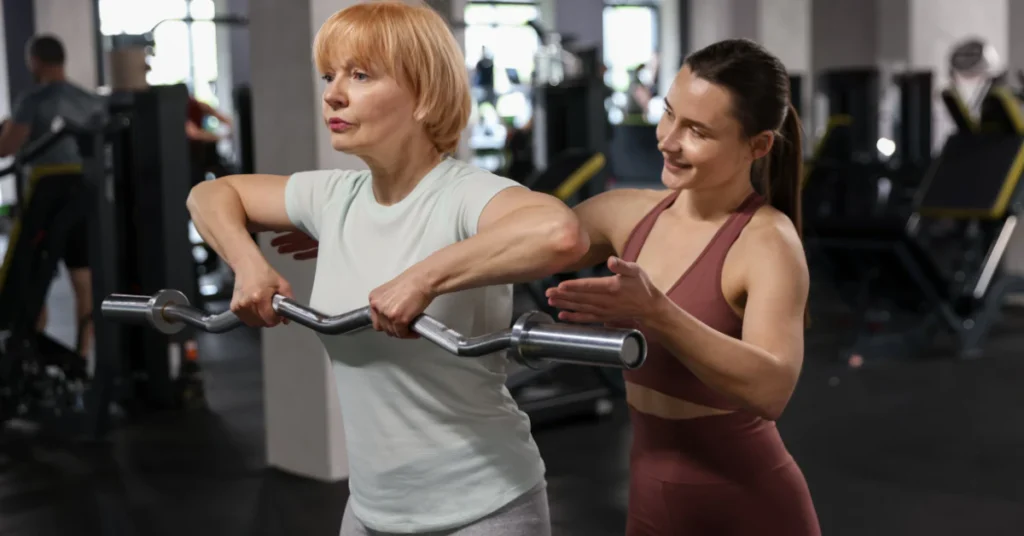
A Rackable EZ curl bar solves a specific problem: standard EZ bars are too short to rest safely inside a power rack or squat rack. The Rackable version adds a longer, straight section in the middle of the bar so it can sit securely on rack hooks or safety pins.
This extra length and reinforced steel make it the heaviest EZ bar type on the market.
- Weight range: 30 to 35 lbs
- Shaft length: Longer than standard or Olympic EZ bars to fit rack width
- Sleeve type: 2-inch rotating sleeves
- Best for: Rack-supported curls, spoto curls, and lifters who want to load heavy without a spotter holding the bar
Rackable EZ bars are popular with serious lifters who want to curl heavier weight safely, since resting the bar on rack pins between sets removes the risk of dropping a loaded bar. Brands like REP Fitness manufacture Rackable EZ bars specifically for this kind of setup, and they’re becoming more common in both commercial gyms and advanced home gyms.
If you’re switching from a standard Olympic EZ bar to a Rackable one, remember you’re adding 10 to 15 extra lbs just from the bar itself, before any plates go on.
How to Identify Your Gym’s Unlabeled EZ Bar
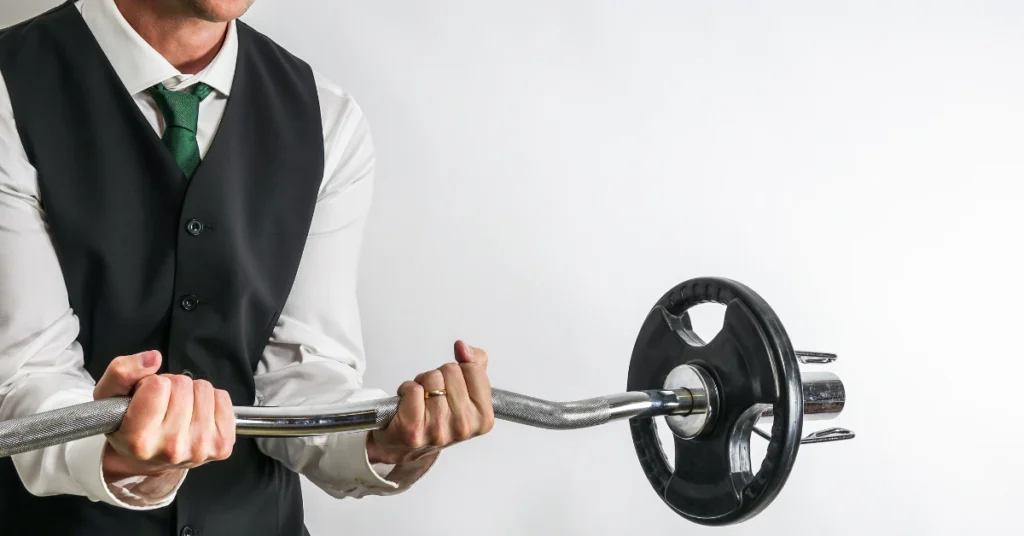
Most commercial gym bars don’t have the weight stamped anywhere visible, which leaves lifters guessing every time they walk up to the rack. If you’re asking how much does a curl bar weigh and your gym’s bar has no label, use this 3-step checklist instead of guessing.
Check the sleeve thickness. Look at the ends of the bar where the plates load. A thin, 1-inch sleeve points to a Standard bar (10 to 15 lbs). A thicker, 2-inch sleeve means you’re looking at an Olympic, Super, or Rackable bar (15 to 35 lbs).
Test the rotation. Grab a sleeve and try to spin it by hand while holding the center shaft still. If it spins freely on bearings, it’s Olympic-spec. If it’s locked solid, it’s a Standard bar.
Measure the length. Lay the bar against a power rack or compare it to a barbell you know the length of. A noticeably longer, straighter middle section means it’s a Rackable EZ bar (30 to 35 lbs), built to rest on rack pins.
Run through these three checks and you’ll land within a few pounds of the actual weight, even with zero markings on the bar.
Should You Count the Bar Weight When Tracking?
Yes. Always log the total weight, including the bar, when tracking your curls. Skipping the bar weight and only logging the plates gives you an inaccurate number that doesn’t reflect what you actually lifted.
Here’s why this matters for progressive overload:
- If you log “40 lbs” on a 20-lb Olympic bar one week and “40 lbs” on a 10-lb Standard bar the next, you’re actually lifting different totals (60 lbs vs. 50 lbs), even though your app shows the same number.
- Over months of training, this kind of inconsistency makes it hard to tell if you’re actually getting stronger or just switching equipment.
The fix is simple: pick one bar type at your gym and stick with it for your tracked lifts. If you train at both a home gym and a commercial gym, note which bar you used next to your log entry. Consistency matters more than perfect precision, as long as you’re comparing apples to apples each session.
Frequently Asked Questions
Is a curl bar 20 or 25 pounds?
It depends on the brand and type. Most Olympic EZ curl bars average 20 lbs, but manufacturing specs vary, so some land closer to 25 lbs. If you’re unsure, 20 lbs is the safest assumption for a standard commercial gym bar unless you’ve confirmed the exact weight with gym staff or a label.
Does the bar weight on a preacher curl station count?
Yes. If the EZ bar sits on a preacher curl bench, you still count its full weight in your total. The preacher pad supports your arms, not the bar, so the bar’s weight (whether Standard, Olympic, or Super) still gets added to your plates for an accurate log.
Does curl bar weight include collars?
No. The weight ranges covered in this guide are for the bar alone, not including spring collars or clips. Collars typically add about 0.5 to 1 lb per pair. Most lifters skip logging this small amount unless they’re tracking numbers with strict precision, like in a powerlifting-style program.
Can I use an EZ curl bar for squats or deadlifts?
It depends on the type. A Rackable EZ bar can work for light front squats since it’s built to rest safely inside a power rack and handle moderate loads. A Standard or Olympic EZ bar is not a good choice for either squats or deadlifts. The angled bends put your hands in an awkward position for these lifts, and the bars aren’t rated for the heavy loads typical in squat or deadlift programming. Stick with a straight Olympic barbell for both of these movements.
Knowing your EZ bar’s exact weight takes the guesswork out of tracking your curls. Whether you’re lifting on a 10-lb Standard bar at home or a 20-lb Olympic bar at the gym, the small checklist in this guide (sleeve thickness, rotation, and length) gets you an accurate number in seconds. For more detail on proper bar selection and lifting technique, ACE Fitness offers additional resources on strength training fundamentals.