
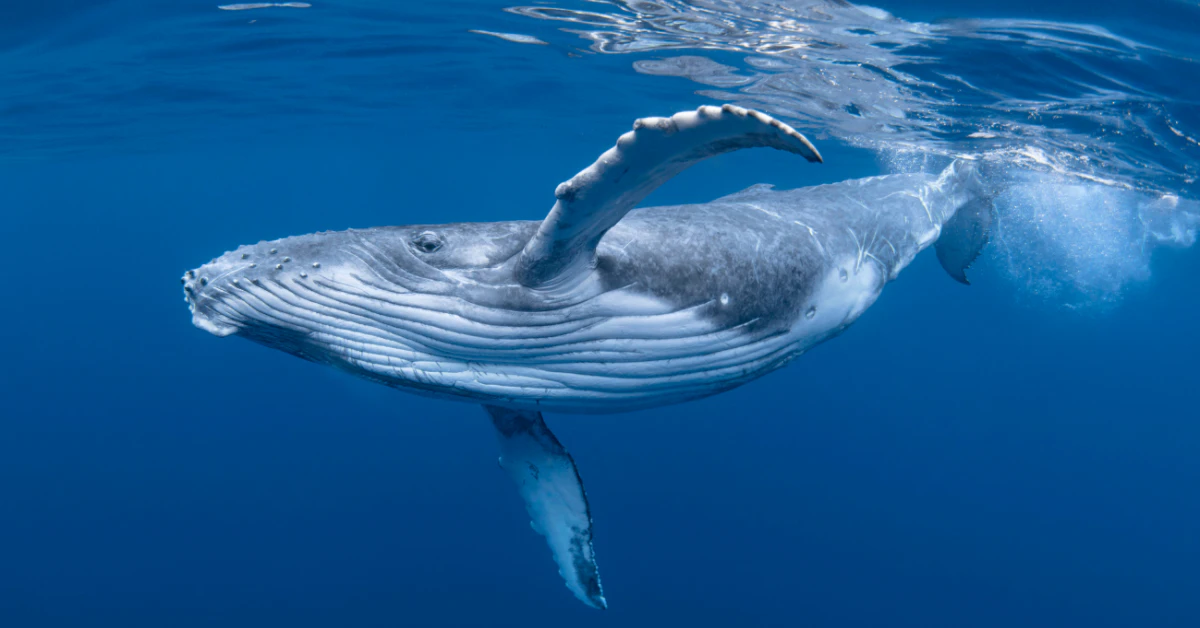
A blue whale weighs between 100 and 150 tons. That’s 200,000 to 300,000 pounds. The heaviest blue whale ever recorded tipped the scales at nearly 200 tons, or about 400,000 pounds.
That’s heavier than 30 adult elephants combined.
But “whale weight” isn’t a one-size-fits-all number. A blue whale and a sperm whale can differ by over 100 tons. Even calves are born bigger than most grown animals on land.
In this guide, you’ll get exact numbers for every major whale species, in both tons and pounds. We’re pulling verified figures from trusted sources like NOAA, so you know these numbers are real, not guesses.
Whether you’re writing a school report, settling a bet, or just curious how whales stack up against each other, this chart has your answer. Let’s break down exactly how much these ocean giants weigh.
How Much Does a Blue Whale Weigh? (The Ocean’s Giant)
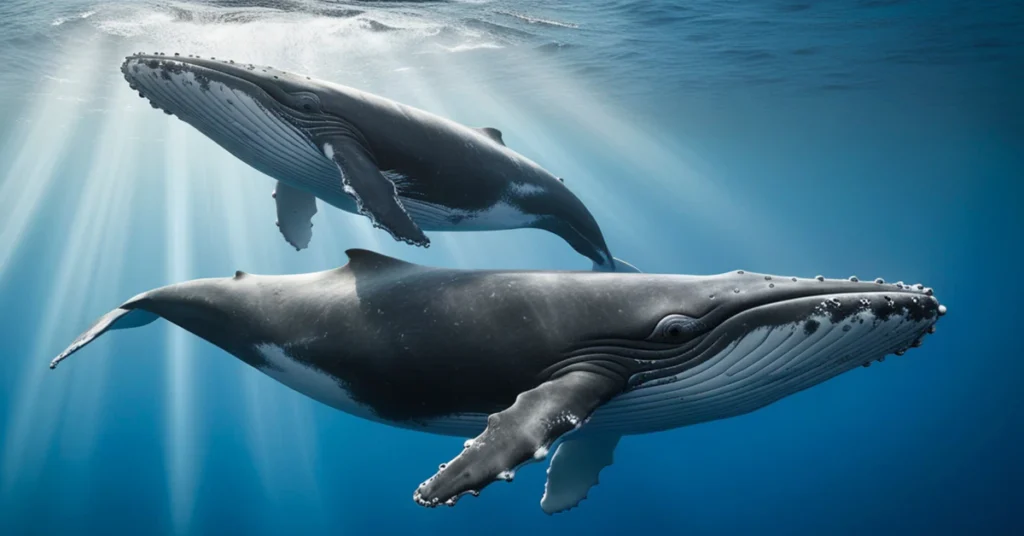
Blue whales are the largest animals to ever exist. Not just today’s largest. Ever. Bigger than any dinosaur.
Here’s a quick snapshot:
- Average Weight: 100 to 150 tons (200,000 to 300,000 lbs)
- Heaviest Whale Ever Recorded: ~190 to 200 tons (about 400,000 lbs)
- Average Length: Up to 100 feet long
- Heart Alone: About the size of a small car
So how does an animal get this big? Water does most of the work.
On land, gravity crushes anything this massive. An animal this heavy couldn’t support its own organs or move its legs. But in the ocean, water holds up most of that weight. Scientists call this buoyancy.
That’s why the biggest animals on Earth all live in water, not on land. The ocean acts like a giant support system, letting blue whales grow far past what any land animal could handle.
Their size isn’t just about standing out, either. A bigger body means a bigger mouth, and that matters a lot when your favorite food is smaller than your finger.
Blue whales eat tiny shrimp-like creatures called krill. Adults swallow up to 4 tons of krill a day. That’s roughly 40 million individual krill, every single day, just to fuel a body this enormous.
Their tongues alone can weigh as much as an elephant. Their blood vessels are wide enough for a small child to swim through.
Every number about a blue whale sounds made up. It isn’t. These are the real, verified stats behind the largest creature in ocean history.
Whale Weight Comparison Chart by Species
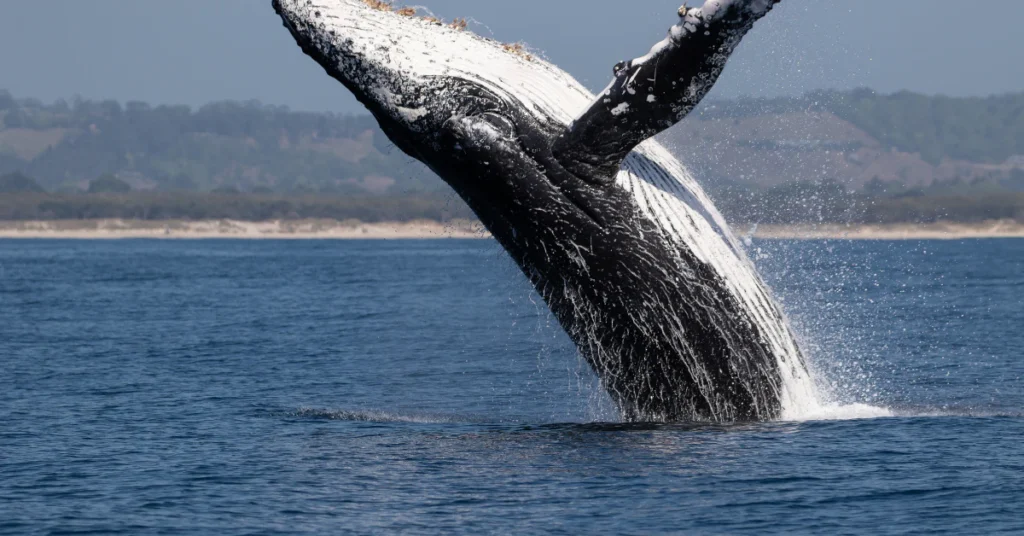
Numbers are easier to understand side by side. Here’s how four major whale species stack up:
| Species Name | Average Weight (Tons) | Average Weight (Pounds) | Interesting Fact |
| Blue Whale | 100–150 tons | 200,000–300,000 lbs | The largest animal in Earth’s history |
| Fin Whale | 40–80 tons | 80,000–160,000 lbs | Nicknamed the “greyhound of the sea” for its speed |
| Sperm Whale | 15–45 tons | 30,000–90,000 lbs | Has the biggest brain of any animal on Earth |
| Humpback Whale | Up to 40 tons | Up to 80,000 lbs | Famous for its long pectoral fins and singing |
Notice the big weight gap between species. That gap comes down to diet.
Blue, fin, and humpback whales are baleen whales. Instead of teeth, they have stiff bristles called baleen. They use these bristles to strain huge amounts of tiny food, like krill and small fish, straight from the ocean. Eating in bulk lets them pack on enormous weight.
Sperm whales are different. They’re toothed whales, and the largest toothed predator on the planet. Their main meal is squid, hunted one at a time in deep water. Hunting individual prey takes more energy and offers less bulk per meal, so sperm whales stay lighter than the biggest baleen whales.
Body shape plays a role too. Blue and fin whales are long and torpedo-shaped, built to carry mass efficiently through water. Sperm whales are stockier, with more of their bulk concentrated up front, especially in that massive, block-shaped head.
So weight isn’t random. It’s shaped by what a whale eats, how it hunts, and how its body is built to survive in the ocean.
How Do Other Whales Measure Up?
The blue whale gets all the attention. But the runners-up are just as wild.
Fin Whales
Fin whales hold the silver medal. They’re the second largest whale on Earth, weighing in at 40 to 80 tons.
That’s up to 160,000 pounds of pure ocean muscle.
Fin whales are built for speed, not just size. Long and sleek, they can cruise at speeds that would leave most other whales behind. Scientists have even nicknamed them the “greyhounds of the sea.”
Despite their massive size, fin whales remain somewhat mysterious. They dive deep and stay on the move, making them harder to study than other giants.
Humpback Whales
So how much does a humpback whale weigh? Up to 40 tons, or around 80,000 pounds.
That’s lighter than a blue or fin whale, but still heavier than a loaded school bus times ten.
Humpbacks are the performers of the whale world. They’re famous for breaching, slapping their massive tails, and singing haunting songs that can travel for miles underwater.
Their long pectoral fins can stretch up to 15 feet, the longest of any whale species. That alone makes them easy to spot from a boat.
Like many whale species, humpbacks were once hunted to the edge of extinction. Groups focused on whale conservation have helped their numbers recover significantly over the past few decades.
Sperm Whales
Sperm whales play a different game entirely. They’re the largest toothed whale on the planet, and the size gap between males and females is huge.
Females average around 15 tons, about 30,000 pounds.
Males are a different story. They can reach 45 tons, or roughly 90,000 pounds. That’s triple the weight of a female.
Why the difference? Males dive deeper and travel farther, often alone, hunting giant squid in the dark depths of the ocean. Bigger bodies help them survive those extreme pressures and long hunts.
Sperm whales also have the largest brain of any animal that has ever lived. Big body, big brain, built for the deep.
Three species. Three very different survival strategies. All proof that “whale” doesn’t mean just one size.
Mind-Blowing Whale Size Comparisons
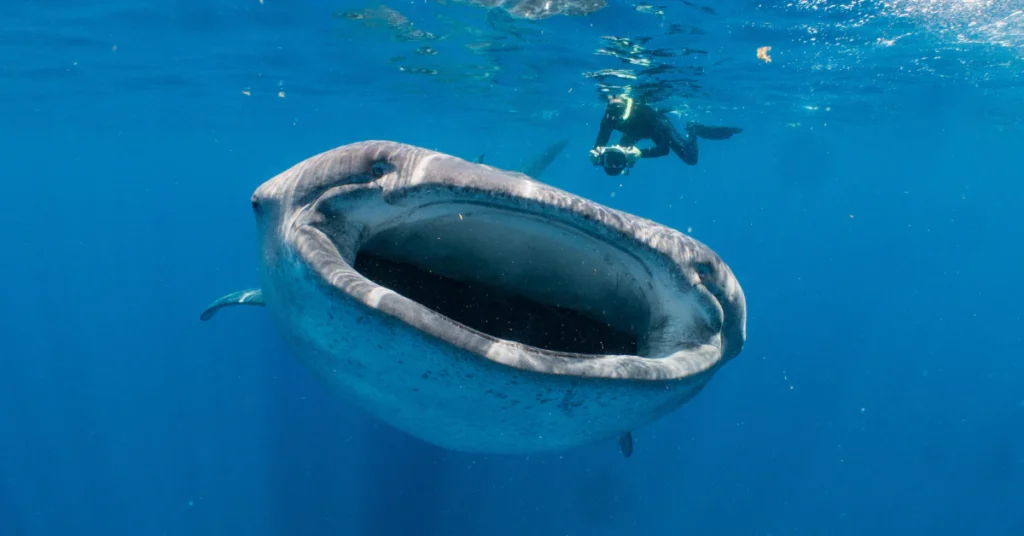
A number like 300,000 pounds doesn’t mean much on its own. So let’s put it next to things you actually know.
A 150-ton blue whale weighs about the same as:
- 30 adult elephants, standing on a scale together
- 15 standard school buses, lined up bumper to bumper
- 2,000 average adult humans, combined
- A fully loaded Boeing 737, with room to spare
Picture your school parking lot filled with buses. Now picture one single animal matching all of them combined. That’s a blue whale.
Here’s the part that really gets wild: that whale could never survive on land.
Gravity doesn’t care how strong an animal is. Without water to help carry that weight, a blue whale’s own body would crush its lungs and organs almost instantly. Its skeleton simply isn’t built to hold up hundreds of thousands of pounds against gravity alone.
In the ocean, it’s a different story. Water supports the whale from every direction at once, like a giant invisible cushion. That’s why the biggest animal in history didn’t evolve legs. It evolved fins.
Size this massive only works in one place on Earth: beneath the waves, where water does the heavy lifting gravity never could.
Word count [218]
How Much Does a Baby Whale Weigh at Birth?
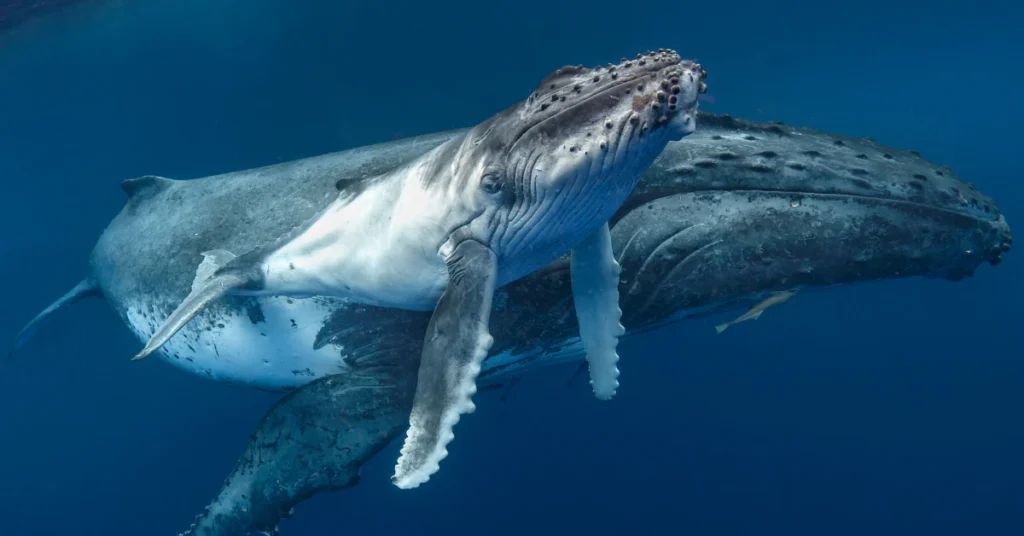
Even whale calves aren’t “small.”
A newborn blue whale calf weighs about 3 tons at birth. That’s roughly 6,000 pounds.
For comparison, that’s heavier than a fully grown giraffe. And that’s just day one.
Growth happens fast after that.
Calves gain almost 200 pounds every single day. That weight gain comes from one source: their mother’s milk.
Blue whale milk is incredibly rich and fatty, almost like heavy cream. It’s built for rapid growth, not slow sipping.
Do the math, and a calf can gain over 1,000 pounds in a single week.
Few animals on Earth grow this fast. By the time most mammals are just learning to walk, a baby blue whale has already added the weight of several adult humans.
Being born huge isn’t optional in the whale world. It’s survival.
Frequently Asked Questions
What was the heaviest whale ever recorded?
The heaviest whale ever recorded was a blue whale, historically estimated between 190 and 200 tons. That’s close to 400,000 pounds. No other animal in Earth’s history has come close to this size, making the blue whale the undisputed heavyweight champion of the planet.
How do scientists actually weigh a whale?
You can’t exactly put a whale on a bathroom scale. Instead, scientists rely on a few clever methods.
3D computer modeling uses body measurements to estimate volume and mass. Drone photography captures a whale’s length and width from above, feeding data into these models. Historical records from the whaling era also provide real weight data, collected decades ago when whales were physically measured.
Combine all three, and researchers get highly accurate estimates without ever touching a scale.
Does blubber affect a whale’s weight?
Yes, massively. Blubber is a thick layer of fat sitting right under a whale’s skin, and it’s incredibly dense.
In some species, blubber can make up a huge percentage of total body weight. It’s not just for insulation, either. Blubber also stores energy for long migrations and helps whales float more easily in cold water.
Without it, whales couldn’t survive in freezing ocean temperatures. With it, they carry serious extra pounds, all for the sake of staying warm and energized in one of the harshest environments on Earth.
Conclusion
Whale weight isn’t one simple number. A blue whale can outweigh a sperm whale by over 100 tons, and even a newborn calf is heavier than most adult land animals. From the ocean’s buoyancy holding up 150-ton bodies to blubber keeping them warm, every pound tells a story about survival. Next time someone asks how much a whale weighs, you’ll have the exact numbers, species by species.