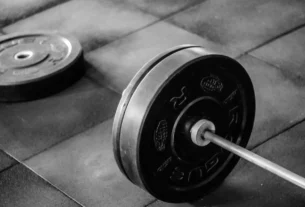

A standard bench press bar weighs 45 pounds (20 kilograms) if you’re lifting at a commercial gym on a standard Olympic barbell. That’s the number you’ll see on almost every bar in a power rack across the USA. But grab a bar at a different gym, and the number can change fast.
Not every bar is built the same. A women’s Olympic bar drops to 35 lbs (15 kg). Smith machines usually run lighter, somewhere between 15 and 25 lbs, because of counterweights built into the track. Some home gym bars don’t follow any standard at all.
This matters more than people think. If you’re tracking your 1-rep max or logging progress week to week, the bar weight is part of your total. Add 45 lbs when you should’ve added 25, and your numbers are off before you even touch the plates. Knowing exactly what’s on the rack keeps your training log accurate and your progress real.
The Standard Olympic Bench Press Bar

When people ask about standard olympic barbell weight, they’re usually picturing the bar used in competitive lifting and most commercial gyms. This is the Men’s Olympic bar, and it follows a fixed spec set by weightlifting federations worldwide. It’s not a guess or a rough estimate, it’s a manufacturing standard.
Men’s Olympic Bar specs:
- Weight: 45 lbs (20 kg)
- Length: 7.2 feet
- Sleeve diameter: 2 inches (50mm)
- Grip diameter: roughly 28–29mm
Brands like Rogue Fitness build their bars to this exact 20kg spec, which is why it’s become the default reference point across gyms in the US.
Women’s Olympic bars are lighter, and that’s by design, not an accident. Competitive weightlifting federations created a separate spec decades ago to fit smaller average hand sizes and different strength standards between men’s and women’s divisions. The result is a bar that’s shorter and thinner, making it easier to grip securely during pressing and overhead movements.
Women’s Olympic Bar specs:
- Weight: 35 lbs (15 kg)
- Length: 6.6 feet
- Grip diameter: 25mm
- Sleeve diameter: 2 inches (same as men’s, so plates still fit)
The 10-lb weight difference comes mostly from a shorter shaft and thinner steel, not a different sleeve size. Plates from a men’s bar will still slide onto a women’s bar without issue.
Here’s a quick side-by-side:
| Feature | Men’s Olympic Bar | Women’s Olympic Bar |
| Weight | 45 lbs (20 kg) | 35 lbs (15 kg) |
| Length | 7.2 ft | 6.6 ft |
| Grip Diameter | ~28–29mm | 25mm |
| Sleeve Diameter | 2 in (50mm) | 2 in (50mm) |
If you’re not sure which bar you’re using, check the grip. A noticeably thinner bar in your hand is almost always the women’s version, even if there’s no label on it.
How Much Does a Smith Machine Bar Weigh?

This is where most lifters get tripped up. If you’re asking how much does the bar weigh on a smith machine and assuming it’s 45 lbs like a free bar, you’re probably wrong. Smith machine bars almost never weigh a true 45 lbs, even though they look identical to a regular barbell.
Here’s why. A Smith machine bar is attached to a fixed track with a counterbalance system, usually a cable and pulley setup or a counterweighted carriage. That system is built to offset some of the bar’s actual weight, so the bar feels lighter than it really is before you even add plates. On top of that, friction from the track itself can add a small amount of resistance back in.
The result is a starting weight that’s usually somewhere between 15 lbs and 25 lbs, depending on the manufacturer and how the machine is calibrated. Some machines land closer to 20 lbs, others closer to 25 lbs. There’s no single industry standard here, which is exactly why this causes so much confusion in gyms.
What to do instead of guessing:
- Check the machine for a sticker or printed placard, most manufacturers list the counterbalanced starting weight somewhere on the frame.
- Ask a gym staff member if there’s no visible label, they’ll usually know the brand and spec.
- If nothing is posted, don’t assume 45 lbs, log your working weight based on the plates added, not the bar’s theoretical starting weight.
Getting this wrong by 20 or 30 lbs can throw off your tracked numbers significantly, especially if you’re comparing lifts between a free bar and a Smith machine. Treat them as two different tools with two different starting points, not interchangeable equipment.
Home Gym vs. Commercial Gym Bars: Spotting the Difference

The biggest giveaway between a commercial gym bar and a home gym bar is the sleeve. Commercial Olympic bars use 2-inch rotating sleeves, built to spin independently from the shaft so the plates don’t twist your wrists during a lift. That rotation, combined with needle or bushing bearings, is part of why these bars cost more and weigh a true 45 lbs.
Standard home gym bars are a different category entirely. Most use 1-inch sleeves instead of 2-inch, which means they’re not compatible with Olympic-style plates, you’ll need standard plates sized for that thinner sleeve. These bars are also commonly shorter, usually in the 5 to 6 foot range instead of the full 7.2 feet, making them easier to fit in a garage or spare room setup.
Because they’re built with thinner steel and no rotating sleeve mechanism, home gym bars are also lighter. Weight typically falls between 15 and 25 lbs, but there’s no fixed industry standard, so it’s worth checking the product listing or manual before assuming a number.
There’s also a smaller category worth knowing: youth and training bars. These are usually made from aluminum instead of steel, built for younger lifters or beginners learning proper form. They weigh far less than a standard bar, typically 11 lbs (5 kg) or 22 lbs (10 kg), depending on the size.
Here’s how the main types stack up:
| Bar Type | Typical Weight (lbs) | Sleeve Diameter |
| Commercial Olympic Bar | 45 lbs | 2 inches |
| Women’s Olympic Bar | 35 lbs | 2 inches |
| Home Gym Bar | 15–25 lbs | 1 inch |
| Youth/Training Bar (Aluminum) | 11–22 lbs | Varies |
If you’re shopping for a home setup and plan to use standard Olympic plates down the road, it’s worth paying more for a 2-inch sleeve bar upfront. Switching plate systems later usually means buying a whole new set.
Specialty Bars Used for Bench Pressing
Not every bencher sticks to a straight barbell. Lifters dealing with shoulder pain, or just looking to train pressing strength differently, often turn to specialty bars. The two most common are the Swiss bar and the cambered bar.
A Swiss bar, also called a multi-grip bar, has parallel handles built into the frame instead of one straight bar. This lets you grip with a neutral hand position, palms facing each other, which takes pressure off the shoulder joint during pressing movements. It’s a popular choice for lifters recovering from shoulder issues or looking to switch things up without ditching the bench press entirely.
A cambered bar curves downward in the middle, which changes the bar path and shifts how the load is distributed through the shoulders and chest. It’s less common than the Swiss bar but shows up in strength training gyms focused on powerlifting accessory work.
Here’s the catch with both: there’s no universal standard weight. Unlike Olympic bars, specialty bars are made by different manufacturers with different materials and designs, so the weight varies from brand to brand.
General weight ranges:
- Swiss bars typically run between 35 lbs and 45 lbs, some branded versions land exactly at 20 kg (44 lbs) to match Olympic bar conventions.
- Cambered bars usually sit in a similar range, though heavier powerlifting-specific versions can weigh more.
Because the weight isn’t standardized, the same rule applies here as with Smith machines: check the bar itself. Most quality specialty bars have the weight stamped or printed somewhere on the frame. If it’s not labeled, ask gym staff or check the manufacturer’s spec sheet before logging it into your training numbers.
The “Gym Math” Confusion: Why 20kg Isn’t Exactly 45 lbs
Here’s something that trips up a lot of lifters once they start paying attention to the numbers: 20 kg doesn’t actually equal 45 lbs. Do the real conversion and you get 44.09 lbs, not 45. So when people debate 45 pound bar vs 20kg like they’re the same thing, they’re technically off by just under a pound.
So why does everyone call it 45 lbs anyway? Simplicity. According to barbell specifications, the Olympic bar standard was built around round, easy-to-calculate numbers for both the metric and imperial systems. In the US, gyms and lifters use pound plates that come in standard sizes: 45, 35, 25, 10, 5, and 2.5 lbs. Rounding the bar up to 45 lbs keeps the math clean, since it matches the weight of a standard plate and makes mental math during loading fast and simple.
The 0.9 lb gap is small enough that it doesn’t meaningfully affect your training. Whether you’re calculating a 1-rep max or just loading plates for a working set, less than a pound of difference isn’t going to change your results or your progress tracking in any real way.
This rounding isn’t sloppy math, it’s a practical convention the fitness industry agreed on because it works. Just know that if you ever see a precise conversion calculator, the 44.09 number is correct, and the 45 lbs you hear in the gym is a rounded, widely accepted standard, not a myth.
Does the Bar Weight Count Towards Your Total Lift?

Yes, always. This trips up a lot of new lifters, but the math is simple: if you’re pushing it up against gravity, it counts as part of your total weight. The bar isn’t a neutral tool sitting outside the equation, it’s mass you’re lifting just like the plates loaded onto it.
Here’s a quick example. A standard Olympic bar weighs 45 lbs. Add a 45 lb plate on each side, and you’re not benching 90 lbs, you’re benching 135 lbs, because the bar itself adds to the total.
The same logic applies if you’re thinking in kilograms. A bench press bar weight kg calculation works the same way: a 20 kg bar with 20 kg plates on each side equals 60 kg total, not 40 kg. Skipping the bar weight in either system means your logged numbers are consistently wrong.
Quick rule to remember:
- Total weight = Bar weight + (Plate weight x 2, one side per plate size)
Get in the habit of including the bar every time you log a set. It keeps your training numbers accurate and makes it easier to track real progress over weeks and months.
How to Test and Verify an Unmarked Bar’s Weight
If a bar has no stamp, sticker, or label, you can still figure out its weight without any special equipment. All you need is a standard bathroom scale.
Here’s how:
- Step on the scale by yourself first and note your bodyweight.
- Pick up the bar and hold it while standing on the scale again.
- Subtract your bodyweight from the new number. The difference is the bar’s weight.
For example, if you weigh 180 lbs alone and 205 lbs holding the bar, the bar weighs 25 lbs.
A few tips to keep this accurate: hold the bar steady rather than letting it swing, and use a scale that reads in small increments rather than rounding heavily. If you can, repeat the test two or three times and average the results to rule out measurement error.
This trick works especially well for Smith machine bars and unmarked home gym bars, where guessing can throw off your entire training log.
Frequently Asked Questions
What is the difference between an Olympic bar and a power bar?
Power bars are built stiffer, with less flex or “whip” when loaded, and usually have more aggressive knurling for a better grip during heavy lifts. Despite the design differences, both Olympic bars and power bars typically weigh the same: 45 lbs (20 kg).
How much does a standard bench press bar weigh?
A standard bench press bar weighs 45 lbs (20 kg). This is the Men’s Olympic bar spec used in most commercial gyms and competitive lifting across the US.
Does a barbell weight include the collars?
No. The standard 45 lb (20 kg) weight refers only to the bare bar, collars are not included. Standard collars add minimal weight, but heavy-duty locking collars can add anywhere from 1 to 5 lbs combined, depending on the brand and material.
Conclusion
Bar weight isn’t a fixed number, it changes depending on what you’re lifting on. A standard Olympic bar gives you a reliable 45 lbs, but Smith machines, home gym setups, and specialty bars all shift that number in different directions. Checking labels, testing with a scale, and knowing your gym’s specific equipment keeps your logged numbers honest. That accuracy is what actually makes your progress tracking mean something over time.