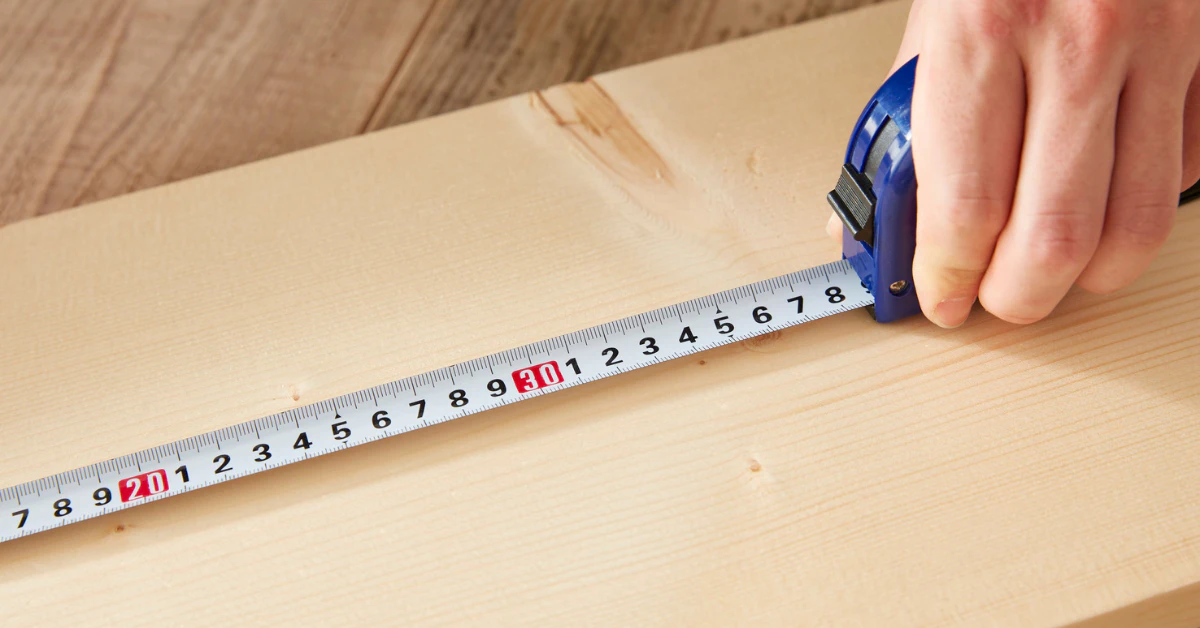
So, how long is 3 feet? It’s exactly 36 inches, 1 yard, or 91.44 centimeters. That’s the quick answer if you’re in a rush and just need the number.
But here’s the thing: you don’t always need a tape measure to picture that length. Once you know a few everyday objects that match it almost perfectly, you can eyeball 3 feet anywhere, in a store, at home, or outdoors.
In this guide, we’ll break down the exact conversions, then walk through 7 real-world examples you already have access to, from kitchen counters to guitars, so you never have to guess again.
Quick 3 Feet Conversion Table
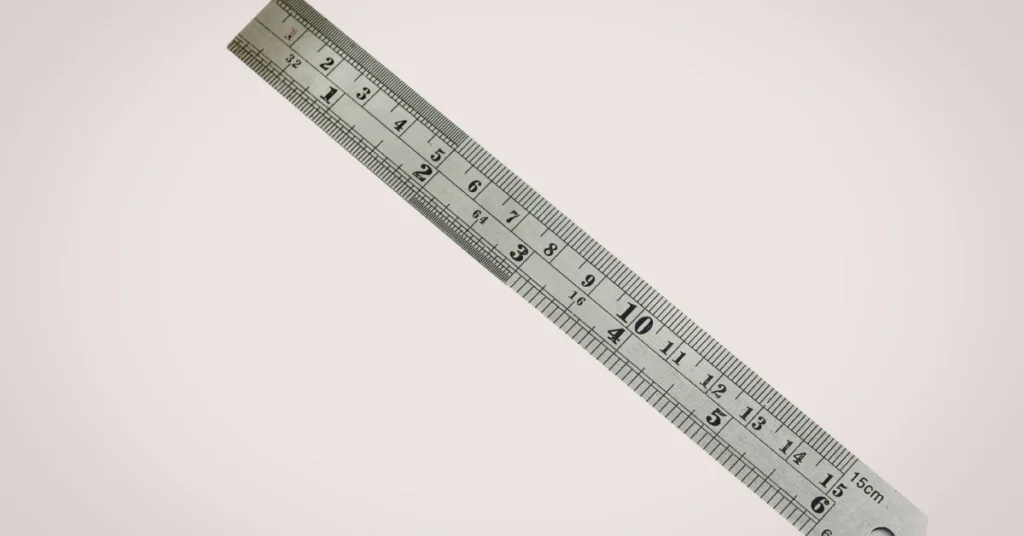
| Unit | Value |
| Inches | 36 |
| Yards | 1 |
| Centimeters | 91.44 |
| Meters | 0.9144 |
Knowing these numbers by heart saves you a lot of guesswork. If you’ve ever shopped for furniture online and seen dimensions listed in centimeters, this table is your cheat sheet. Now you know 3 feet in cm is 91.44, so you can skip the mental math and just check if that bookshelf or table fits your space.
It’s not just for shopping, either. DIY projects, home renovations, and even school assignments often switch between imperial and metric units without warning. Maybe your tape measure only shows inches, but the instructions call for meters. Having this table handy means you’re never stuck doing conversions on the fly or second-guessing your measurements mid-project.
One quick glance, and you’ve got the answer in every unit you’d actually need.
How to Visualize 3 Feet Without a Tape Measure

No ruler in sight? Your own body can get you pretty close. These simple tricks are the easiest way to visualize 3 feet when you’re caught without measuring tools.
Use your stride
- The average adult’s walking stride (one step) runs roughly 2.5 to 3 feet long.
- Take one normal, relaxed step forward. That’s close enough to 3 feet for most quick estimates, like spacing out garden plants or checking if furniture will clear a doorway.
- Just keep in mind this varies by height, so a taller person’s stride runs longer and a shorter person’s runs a bit shorter.
Use your arm span
- For an average adult, the distance from the center of your chest to the tips of your fingers, with your arm stretched straight out, is about 3 feet (1 yard).
- Stand next to what you’re measuring, plant one hand at your chest, and reach your other arm out fully. That span is your built-in yardstick.
- This trick works great for quick checks like fabric length, curtain width, or how far apart to hang two picture frames.
Other handy references
- Two steps of a smaller child (roughly 6 to 8 years old) can also land close to 3 feet combined, though this one’s less reliable.
- If you’re standing near a doorway, many exterior doors are built to a standard width that lines up with 3 feet, giving you a visual anchor without any tool at all.
These methods aren’t lab-precise, but they’re more than accurate enough for everyday situations. So if you’re wondering how to measure 3 feet without a ruler, your stride and your arm span are the two fastest answers, no app, no tape, no waiting.
7 Everyday Household Items That Are 3 Feet Long
You don’t need to picture an abstract number. You’ve probably touched most of these items already. Here are 7 things that are 3 feet long, or close enough that you can use them as a mental ruler.
A Standard Yardstick
This one’s the obvious starting point. A traditional yardstick is exactly 3 feet, 36 inches long, by design. It’s the one tool built specifically to represent this measurement, so if you’ve got one in a closet or garage, you’ve already got a perfect 3-foot reference.
Standard US Kitchen Counter Height
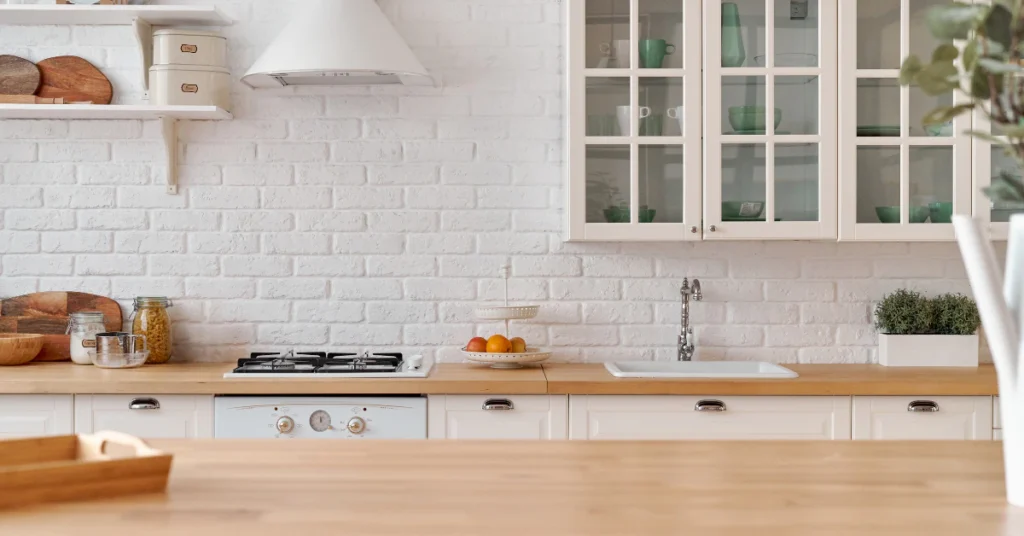
Next time you’re in your kitchen, look down. Standard US kitchen base cabinets with countertops are built to be exactly 36 inches tall from the floor. That’s not a coincidence. It’s an industry standard designed around comfortable working height for most adults. The National Kitchen & Bath Association sets guidelines around these dimensions to keep kitchens functional and consistent across homes.
Standard Exterior Front Door Width
Walk up to almost any front door on a typical American home, and you’re looking at another 3-foot benchmark. A standard residential exterior front door is built to be 36 inches long, er, wide, making it one of the easiest real-world anchors for this measurement since you walk through one every day.
ADA Accessible Hallway Clearance
Public hallways and accessible routes follow strict sizing rules, too. The Americans with Disabilities Act (ADA) requires a minimum clear width of 36 inches for accessible routes and hallways. This ensures enough space for wheelchairs and mobility devices to pass through comfortably, and it’s a great reminder that 3 feet isn’t just a random number. It’s a functional, legally mandated space in buildings everywhere.
A 3/4 Size Acoustic Guitar
If you or your kid plays guitar, this one might already be sitting in your living room. A standard 3/4 size acoustic guitar is typically about 36 inches long, from the top of the headstock down to the base. It’s a popular choice for younger or smaller players, and it happens to line up almost exactly with our 3-foot benchmark.
A Golden Retriever
Here’s a fun, less technical one. Measured from snout to the base of the tail, an adult Golden Retriever is roughly 3 feet long. So if you’ve got a dog like this at home, you’re living with a furry measuring stick. It’s not a precise scientific standard, but it’s a relatable way to picture the length without doing any math.
Three Standard 12-Inch Floor Tiles
Last one’s simple math turned visual. Standard floor tiles are commonly sold in 12-inch squares. Line up three of them side by side, and you’ve got exactly 36 inches long, a full yard stretched across your floor. Next time you’re in a tiled kitchen or bathroom, count three tiles and you’ll have a clear picture of the distance.
Quick Recap
| Item | Where You’ll Find It |
| Yardstick | Garage, toolbox |
| Kitchen counter height | Kitchen |
| Front door width | Entryway |
| ADA hallway clearance | Public buildings |
| 3/4 size acoustic guitar | Living room, music store |
| Golden Retriever (snout to tail) | Backyard, living room |
| Three 12-inch floor tiles | Kitchen, bathroom |
Each of these gives you a different way to recognize 3 feet without ever pulling out a tape measure. Once one of these sticks in your head, you’ll start spotting that length everywhere.
3 Feet in Sports & Recreation

Sports gear is full of 3-foot references once you start looking. Here’s where that length pops up on the field, the court, or the sidewalk.
Baseball Bats
Youth baseball bats usually range from 26 to 32 inches, so they fall a bit short of the full 3 feet. But step up to a professional-level bat, and you’re looking at 34 to 36 inches, right in our target zone. So next time you watch a game, the bat the pros are swinging is close to, or exactly, 3 feet long.
Skateboards
Grab a standard skateboard, and you’re holding something just shy of 3 feet. Most decks run 31 to 33 inches long, close enough that it’s a useful mental reference even though it doesn’t hit the mark exactly. It’s a good example of how “about 3 feet” shows up more often than the precise number.
Golf Clubs
Golf bags actually give us two data points here. A men’s golf driver typically runs around 45 inches, well past our 3-foot mark, built long to generate maximum swing speed and distance. But swap that for a putter, and you’re back in familiar territory. A standard putter measures around 34 to 36 inches, landing right around 3 feet, which makes sense since putting needs more control and precision, not power.
Why This Matters
If you’re shopping for gear, whether it’s picking the right bat size for a kid or choosing a putter that fits your height, knowing where these items land compared to 3 feet gives you a quick gut check before you even look at the exact spec sheet.
How Big is 3 Feet Compared to Other Measurements?
Numbers make more sense side by side. Here’s how 3 feet stacks up against the measurements you’ll bump into most.
- Vs. 1 meter: 3 feet is slightly less than a meter. One meter equals 3.28 feet, so if you’re picturing a meter stick, 3 feet falls just a bit short of it.
- Vs. 1 yard: These are exactly the same thing. A 1 yard measurement is just another way of saying 3 feet, so you can use the two terms interchangeably without any conversion at all.
- Vs. 2 feet: Two feet is noticeably smaller, close to the width of a standard interior closet door. So 3 feet gives you roughly 50% more length than that.
- Vs. 4 feet: Four feet is a foot longer, matching the width of a standard sheet of plywood. That extra foot makes a bigger difference than it sounds.
FAQs
How many inches equal 3 feet?
Exactly 36 inches. Since 1 foot always equals 12 inches, multiplying by 3 gives you that clean, round number every time.
What is the length of 3 feet?
Three feet equals 1 yard, 36 inches, or 91.44 centimeters. All four of these numbers describe the exact same length, just in different units.
How to visualize 3 feet?
The easiest way is to picture a standard yardstick, since it’s built to be exactly this length. You can also think of your own walking stride, which runs close to 3 feet, or a standard exterior door width.
How big is a size 3 foot?
This one trips people up because it mixes up two completely different measurements. A US infant or toddler shoe size 3 is only about 4.1 inches long, measuring an actual foot, not a unit of length. So a “size 3 foot” (the shoe size) has nothing to do with 3 linear feet, which is 36 inches. If you ever see this phrase searched online, it’s almost always someone confusing shoe sizing with the measurement of length, so now you know the difference.
Conclusion
Once you know what to look for, 3 feet (36 inches) shows up everywhere, your kitchen counter, your front door, even your dog. You’ll never really need a tape measure again. Just trust your stride, your arm span, or whatever’s closest at hand.