

Before you order concrete or haul it, you need one number: how much does a yard of concrete weigh?
A standard cubic yard of concrete weighs approximately 4,050 pounds, or roughly 2 tons.
That number comes from simple math. One cubic yard holds 27 cubic feet, and standard mix weighs about 150 pounds per cubic foot.
Your actual load can be different. Water content, aggregate type, and steel reinforcement all change the weight. Lightweight mixes drop to about 3,105 pounds per yard, while heavyweight mixes can reach 6,750 pounds. Groups like the National Ready Mixed Concrete Association publish guidance on these mixes.
Below, you will find weight tables by mix type, wet versus cured numbers, and what your pickup truck or dumpster can safely handle. Use these numbers to plan your order and avoid overloading your vehicle.
Breaking Down the Weight by Concrete Type
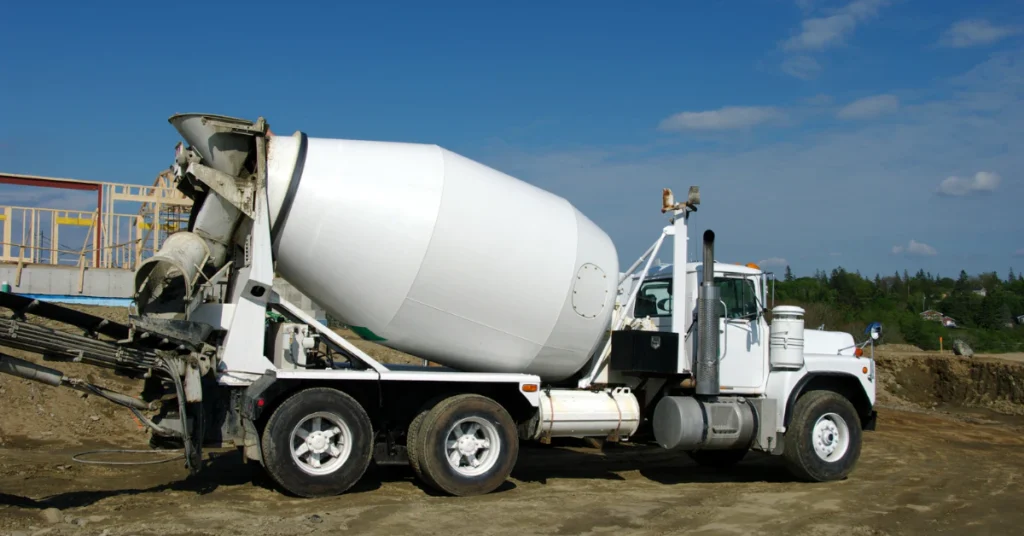
Not all concrete weighs the same. The mix inside the truck decides the final number, and the gap between types is big. One cubic yard equals 27 cubic feet, so every pound per cubic foot adds 27 pounds to your load.
Here is how the three main types compare:
| Type | Weight per Cubic Foot | Weight per Cubic Yard | Best Used For |
| Lightweight | 115 lbs | 3,105 lbs | Rooftop decks, upper floors, insulation layers |
| Standard | 150 lbs | 4,050 lbs | Driveways, patios, sidewalks, footings, slabs |
| Heavyweight | Up to 250 lbs | Up to 6,750 lbs | Radiation shielding, counterweights, marine work |
Standard Concrete
This is the mix most homeowners order. It weighs about 4,050 pounds per yard, just over 2 tons. If your project does not say otherwise, plan around this number.
Lightweight Concrete
Lightweight mixes use lighter materials in place of heavy stone. The result is about 3,105 pounds per yard, which is roughly 900 pounds less than standard.
Builders pick it when weight is a problem. A rooftop deck or an upper floor can only hold so much, so a lighter mix keeps the structure from carrying extra load.
Heavyweight Concrete
Heavyweight mixes use dense aggregates to pack in more mass. They can reach 6,750 pounds per yard, which is almost 3.5 tons.
That extra mass has a job to do. It blocks radiation in hospitals and labs, and it works as a counterweight in bridges and cranes. You will rarely need this mix for a backyard project.
Quick tip: Always ask your supplier which mix they are sending. A wrong guess on type can throw off your weight math by thousands of pounds.
Wet vs. Cured Concrete: Does Drying Change the Weight?
Yes, but only a little. Wet concrete is heavier because it still holds extra water. Once that water leaves, the slab gets lighter.
Here is the wet vs dry concrete weight picture for one cubic yard:
| Stage | Approx. Weight per Yard |
| Freshly poured (wet) | About 4,050 lbs |
| Fully cured (after 28 days) | About 3,900 to 3,950 lbs |
| Water lost while curing | About 100 to 150 lbs |
What Happens During Curing
Concrete does not just “dry out.” It goes through a chemical process called hydration. Some water bonds into the mix, and the rest slowly evaporates over about 28 days.
During that time, a cubic yard loses roughly 100 to 150 pounds of water weight. That is a small drop compared to the full 4,050 pounds. Most of the weight stays put because stone, sand, and cement do not evaporate.
The American Concrete Institute publishes curing guidance if you want the technical details.
Why This Matters for Demolition
Say you are tearing out an old patio. That slab is fully cured, so it weighs a bit less than it did on pour day.
Do not let that fool you, though. Broken concrete is still very heavy. Dumpsters have strict weight limits, and haulers can charge extra when you go over.
Quick tip: For dumpster planning, use about 3,900 pounds per yard of old, cured concrete. Then check your rental company’s weight limit before you start loading.
Aggregates and Reinforcements: What Else Adds Weight?
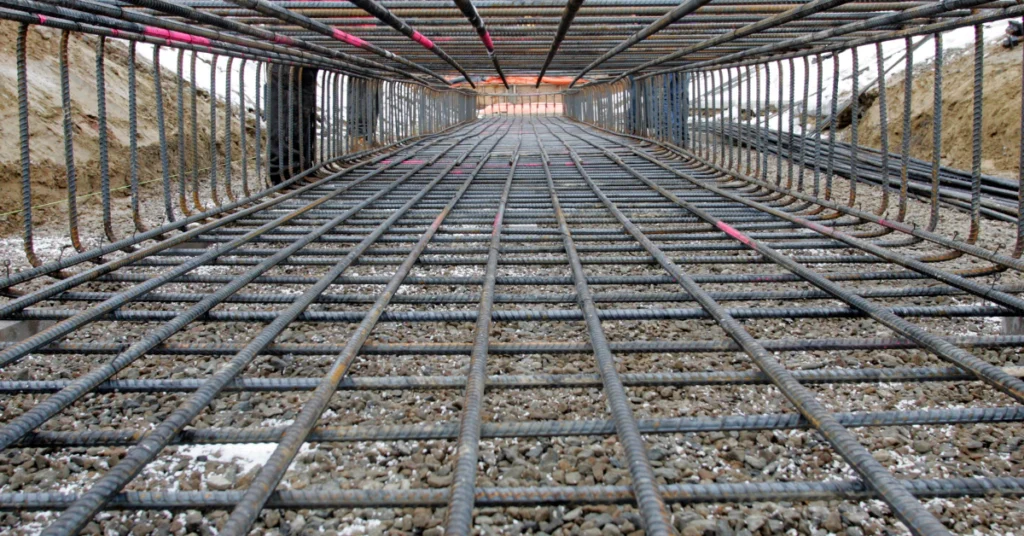
The 4,050-pound number is a starting point. Real slabs can weigh more or less, depending on what went into them. If you are planning a demolition, these factors matter.
Here are the main things that change the weight:
- Aggregate type: The stone and sand in the mix make up most of the weight.
- Aggregate size: Larger, denser stone packs more mass into each cubic foot.
- Water-to-cement ratio: More water means a heavier pour at first, but a weaker slab.
- Rebar or wire mesh: Steel adds weight on top of the concrete itself.
How Aggregates Change Density
Crushed stone and gravel are the usual choices for standard mixes. They are dense, which is why standard concrete lands near 150 pounds per cubic foot.
Expanded shale is different. It is a baked, lightweight material full of tiny air pockets. Swap it in for heavy stone, and the mix drops toward the 115 pounds per cubic foot range we covered earlier.
For a typical backyard slab, you will almost always have gravel or crushed stone. Plan around standard weight unless you know otherwise.
How Rebar Adds Weight
Steel is much heavier than concrete by volume. A grid of #4 rebar (1/2 inch) spaced 2 feet apart adds about 100 to 150 pounds per cubic yard.
That is a small bump, but it counts when you are close to a weight limit. Wire mesh adds less, since the strands are thinner.
Quick tip: Tearing out a reinforced patio? Add about 150 pounds per yard to your estimate. It gives you a safer number when you check dumpster limits.
Truck Capacity: Can Your Pickup Haul a Yard of Concrete?
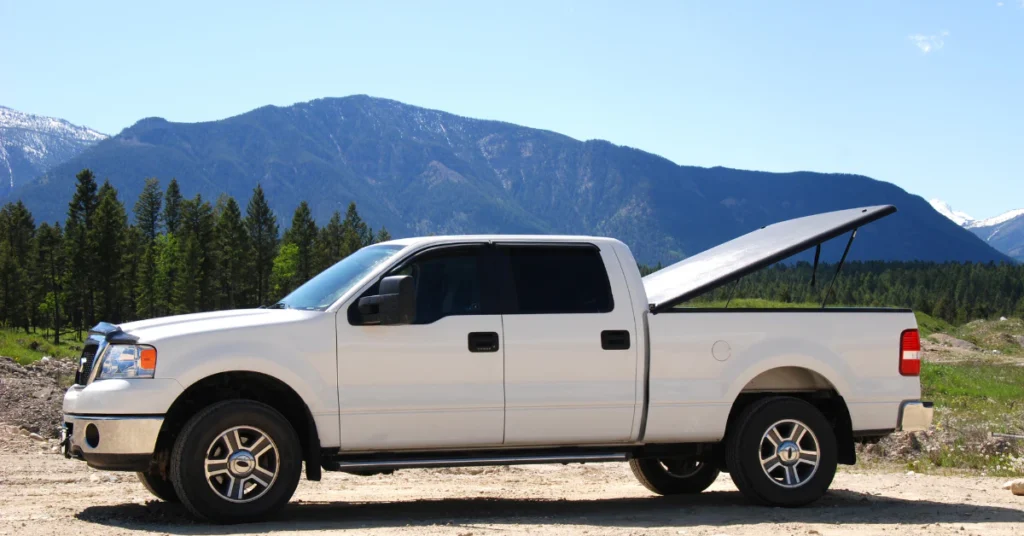
No. A standard half-ton pickup cannot safely carry a full yard of wet concrete. A yard weighs about 4,050 pounds. A truck like the Ford F-150 or Chevy Silverado 1500 has a payload of roughly 1,500 to 2,000 pounds.
That means the load is more than double what the truck is built to carry.
Why It Is So Dangerous
Payload is the total weight your truck can carry, including cargo, passengers, and gear. Go past it and things break fast.
- Suspension damage: Springs flatten and shocks wear out.
- Weak braking: A heavy load adds stopping distance you may not have.
- Poor steering: The front end gets light, and the truck can feel loose on turns.
- Tire blowouts: Overloaded tires overheat quickly.
Wet concrete also shifts and sloshes as you drive. That makes the truck harder to control. Your exact limit is printed on the sticker inside the driver’s door. You can also check Ford’s F-150 specs for payload by model.
What Can You Safely Haul?
At 1,500 to 2,000 pounds of payload, a half-ton pickup can carry about one-third to one-half of a yard. That is before you count passengers and tools, so the real number is lower.
Better Ways to Move a Yard
- Order ready-mix delivery. This is the safest and easiest choice for most DIYers.
- Rent a heavy-duty truck. Think F-350 dually or F-450, and always check the payload sticker first.
- Use a tow-behind mixing trailer. These mix small batches on site.
- Make several small trips. Haul bagged mix instead, a few bags at a time.
Quick tip: Delivery fees are cheap compared to a ruined suspension or an accident.
Bag Math: How Many Bags Make a Cubic Yard?

Bagged concrete is easy to buy, but the numbers get confusing fast. Each bag makes less than a cubic foot, and a yard has 27 of them.
If you have wondered how many bags of concrete in a yard, here is the quick math:
- 80 lb bags: Each bag yields about 0.6 cubic feet. 27 ÷ 0.6 = 45 bags per yard.
- 60 lb bags: Each bag yields about 0.45 cubic feet. 27 ÷ 0.45 = 60 bags per yard.
Why the Bag Weight Does Not Match 4,050 Pounds
Either way, you are lifting about 3,600 pounds of dry mix (45 × 80 or 60 × 60). A finished yard weighs about 4,050 pounds. The difference comes from the water you add when mixing.
Yields on the bag are estimates, so check the label on your brand. Buy 3 to 5 extra bags so you do not run short mid-pour.
Quick Cost and Effort Check
Here is what a full yard means in real work:
- 45 bags of 80 lbs each, loaded, unloaded, and poured
- 60 bags if you pick the lighter 60 lb size
- Hours of mixing, with the concrete setting while you work
Quick tip: Mixing 45 bags by hand is exhausting, and a slow pour can leave weak seams between batches. For anything over one yard, ordering a ready-mix truck is usually the better choice. The National Ready Mixed Concrete Association has helpful guidance on ordering.
Why Knowing Concrete Weight Matters
A wrong weight guess costs real money. It can mean overweight fees, a damaged structure, or a truck that cannot handle the job. Here are three places where the number counts most.
- Ordering dumpsters: Say you are demolishing a 10×10 patio, which is about 1.2 yards of concrete. That works out to roughly 5,000 pounds (2.5 tons) of debris. Pick a dumpster that can handle at least that much, or you may pay overweight fees at the dump.
- Structural support: Decks, roofs, and upper floors can only carry so much. Before you pour footings or add a concrete layer, check the load. This is where lightweight mixes help, since they cut about 900 pounds per yard.
- Transportation logistics: The weight decides which vehicle you need. A half-ton pickup is too small for a full yard, so you may need a ready-mix truck, a heavy-duty rental, or a trailer.
The Takeaway
Do the weight math before you order, rent, or haul anything. It takes two minutes and protects your budget, your truck, and your project.
For a 10×10 patio, the weight depends on slab thickness. Check your slab’s depth, then convert cubic feet to yards (divide by 27) before you book a dumpster.
Frequently Asked Questions
How much does 5 yards of concrete weigh?
Five yards of standard concrete weighs about 20,250 pounds, or just over 10 tons. That is far too much for a pickup, so plan on a ready-mix truck.
What is the weight of a cubic foot of concrete?
A cubic foot of standard concrete weighs about 150 pounds. Lightweight mixes drop near 115 pounds, and heavyweight mixes can reach 250 pounds.
Is cement the same as concrete?
No. Cement is the fine powder that works as the binder. Concrete is the finished product, made by mixing cement with sand, gravel, and water.
A yard of standard concrete weighs about 4,050 pounds, and that single number shapes almost every decision on your project. Check your mix type first, then think about water, steel, and curing time. Run the math before you order a dumpster, rent a truck, or load your pickup. A few minutes of planning keeps your budget, your vehicle, and your crew safe.