So, how long is 4 inches? It’s 10.16 centimeters, or 101.6 millimeters. Still sounds abstract? Here’s an easier way to picture it: grab an empty toilet paper roll. That cardboard tube running down the middle is almost exactly 4 inches long. Hold it up, and now you know the length by heart.
Numbers on a screen rarely stick in your head. A 4 inch length visual does. That’s the whole point of this guide. Instead of memorizing a conversion chart, you’ll match 4 inches to things you already touch every day, your wallet, your desk drawer, even your mail.
You’ll find plenty of objects that are 4 inches long once you start looking. A credit card measured corner to corner. The short edge of an index card. A business envelope’s width. None of these are rare or hard to find. They’re sitting around your house right now.
By the end of this guide, you won’t need a ruler or a phone calculator to picture 4 inches. You’ll just reach for something nearby and know.
4 Inches Conversion Guide (cm, mm, and more)
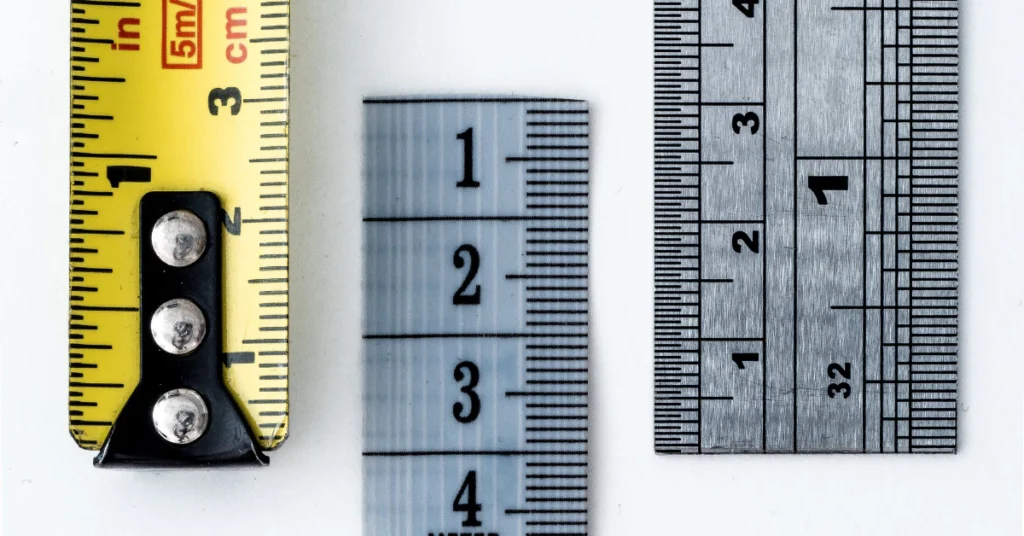
If you need 4 inches in cm, the short answer is 10.16 centimeters. But depending on what you’re measuring, you might need a different unit. Here’s a quick table with every common conversion.
| Unit | Value |
| Centimeters | 10.16 cm |
| Millimeters | 101.6 mm |
| Feet | 0.33 ft |
| Meters | 0.1016 m |
These numbers come straight from the standard inch to metric conversion, where one inch always equals 2.54 centimeters. Multiply that by 4, and you land on 10.16 cm every time.
So why should a USA reader care about metric units at all? A few real reasons come up often. If you shop online and order a product made overseas, the listing usually shows size in centimeters, not inches. Furniture, phone cases, and craft supplies from international sellers are common examples. DIY tutorials from YouTube creators outside the US also tend to use metric measurements, so a quick mental conversion saves you from guesswork.
Even recipe tools, 3D printing files, and some sewing patterns switch between inches and centimeters depending on where they’re published. Knowing that 4 inches equals about 10 cm means you can follow instructions without stopping to look anything up.
If you want to double check these figures yourself, the National Institute of Standards and Technology keeps official conversion standards for US measurement units.
Once you have these numbers down, the next step is seeing what 4 inches actually looks like in real life.
15 Common Everyday Things That Are About 4 Inches Long
Here are 15 real objects you can use as a mental ruler. Most of these are already in your house, car, or junk drawer.
A Cardboard Toilet Paper Tube
The empty cardboard core inside a roll of toilet paper measures 4 to 4.1 inches long. This is one of the easiest references because almost every home has one sitting in the trash right now.
- Pull the empty tube out before you toss it.
- Hold it next to the object you’re measuring.
- If your object matches the tube’s length, it’s about 4 inches.
This works so well because toilet paper manufacturers have kept this size consistent for decades, even as other packaging has shrunk.
The Short Edge of a 4×6 Index Card
A standard index card measures 4 inches by 6 inches. The short side is exactly 4 inches, no rounding needed.
- Turn the card sideways so the short edge faces you.
- Line that edge up against whatever you’re sizing.
- Index cards are cheap and sold in nearly every US store, so this is easy to keep on hand for future reference.
Teachers, students, and office workers already have a stack of these nearby, which makes this one of the most practical options on the list.
A 4×4 Square Post-it Note
Square Post-it notes come in a 4 inch by 4 inch size. Unlike the standard rectangular sticky note, this one gives you a full 4-inch edge on all four sides.
- Stick it flat on a surface.
- Measure your object against any one edge.
- Because it’s a perfect square, you get two reference lines in one note, both the top and the side.
If you work in an office, check your supply drawer. These are common in planners and project boards.
The Diagonal of a Standard US Credit Card
A credit card is 3.375 inches wide and 2.125 inches tall. Measured corner to corner, the diagonal comes out to 3.98 inches, which is close enough to 4 inches to use as a visual guide.
Here’s the simple math behind it: when you measure a rectangle diagonally, you’re finding the longest possible line inside it. With a width of 3.375 inches and a height of 2.125 inches, that corner-to-corner line lands just under 4 full inches.
- Pull any card from your wallet.
- Picture a line running from the bottom-left corner to the top-right corner.
- That line is your 4-inch reference.
This works with debit cards, gift cards, and most ID cards too, since they follow the same standard size.
A Standard US Drink Coaster
Many drink coasters sold in the US measure 4 inches by 4 inches, matching the shape of a square Post-it note.
- Check a coaster from your kitchen or living room.
- Square coasters are more likely to hit this size than round ones, which can vary.
- If you have a set from a restaurant or coffee shop, those often follow this same measurement.
Coasters are a good backup option if you don’t have an index card or sticky note nearby.
Width of a No. 10 Business Envelope
A No. 10 envelope, the standard size used for business letters and bills in the US, measures 4.125 inches wide.
- Grab any envelope from a bill or piece of mail.
- The short side (the width) is your reference point.
- This is slightly over 4 inches, so it’s useful when you want a “just a bit more than 4 inches” comparison.
Almost every US household has a few of these sitting in a drawer or mail pile, making this one of the most accessible items on the list.
4 US Quarters Placed Side-by-Side
Line up four quarters in a row, edge to edge, and you get approximately 3.82 inches. It’s not a perfect 4 inches, but it’s close enough to picture the length in a pinch.
- Lay the coins flat on a table.
- Push them together so there’s no gap between edges.
- Use this when you don’t have paper items nearby but have spare change in your pocket.
This trick is handy in situations like a store or car, where you might not have an index card but almost always have coins.
A Standard 4-Inch Paint Roller
Paint rollers come in several widths, and 4 inches is one of the most common sizes sold at hardware stores. This size is often labeled directly on the packaging.
- Check the roller sleeve itself, not the handle.
- The roller’s length, not its circumference, is the 4-inch measurement.
- If you have leftover painting supplies in the garage, this is a fast way to visualize the size.
Because the size is printed right on the package, this item doubles as a built-in label for the measurement.
A Popsicle or Craft Stick
Standard wooden popsicle sticks and craft sticks usually run from 4 to 4.5 inches long, depending on the brand.
- Check any leftover popsicle sticks from a craft project or dessert.
- These are sold in bulk at craft stores, so if you have kids or do DIY projects, you likely have a bag of these already.
- Because the length can vary slightly by brand, treat this as a close estimate rather than an exact one.
This is one of the most kid-friendly references, since many households with children already have a stash of these.
Standard Electrical Outlet Box Height
The metal or plastic box behind a standard electrical outlet is commonly 4 inches tall. Electricians and contractors rely on this size as an industry standard.
- Look at an outlet cover plate removed from the wall, or check with a contractor if you’re doing home repairs.
- This reference is more useful for home improvement projects than everyday measuring.
- If you’re hanging shelves or art near an outlet, this gives you a quick spatial comparison.
This one is less commonly visible day to day, but it’s a solid backup for anyone working on home projects.
Two Standard 2-Inch Golf Tees End-to-End
Golf tees commonly come in a 2-inch size. Line up two of them end-to-end, and you get a 4-inch reference.
- Place one tee’s point touching the top of the other.
- This works best as a quick, improvised measuring stick if you golf or have tees in a garage drawer.
- Because tee lengths vary slightly by brand, this is another close estimate rather than a perfect one.
This is a fun option for golfers who want a reference tool they already carry in their bag.
A 100mm Cigarette
A 100mm cigarette measures 3.93 inches, just slightly under 4 full inches.
- This size is printed directly on most cigarette packs, making it easy to confirm.
- Use this only as a rough visual, since it falls just short of the full 4-inch mark.
This reference is mostly useful for adults who are already familiar with this product size from everyday use.
The Width of a Standard Man’s Palm Across the Knuckles
An average adult man’s palm, measured across the knuckles, is roughly 3.5 to 4 inches wide.
- Spread your fingers slightly and measure straight across your knuckles.
- This varies from person to person, so it works better as a ballpark estimate than an exact tool.
- It’s most useful when you have no other object nearby and need a fast, rough guess.
Because everyone’s hand size is different, treat this one as the least precise option on the list, but still a handy backup.
A Standard Pocket Comb
Many pocket combs, the kind sold in drugstores and barber shops, measure exactly 4 inches long.
- Check a comb from your bathroom drawer or bag.
- Pocket-sized combs are more likely to hit this exact length than larger styling combs.
- This is a convenient option since combs are small, flat, and easy to carry around for comparison.
If you keep one in your bag or car, it doubles as a built-in measuring tool.
A 4-Inch Zip Tie
Zip ties, also called cable ties, are commonly sold in a 4-inch length, and the size is usually printed right on the packaging.
- Check a bag of zip ties in your garage, toolbox, or junk drawer.
- Lay one flat, unlooped, to measure its full length.
- Because the size is labeled on the package, this is one of the most reliable and exact references on the list.
Zip ties are cheap, common, and easy to keep in a toolbox specifically for quick size checks like this one.
How to Measure 4 Inches Without a Ruler
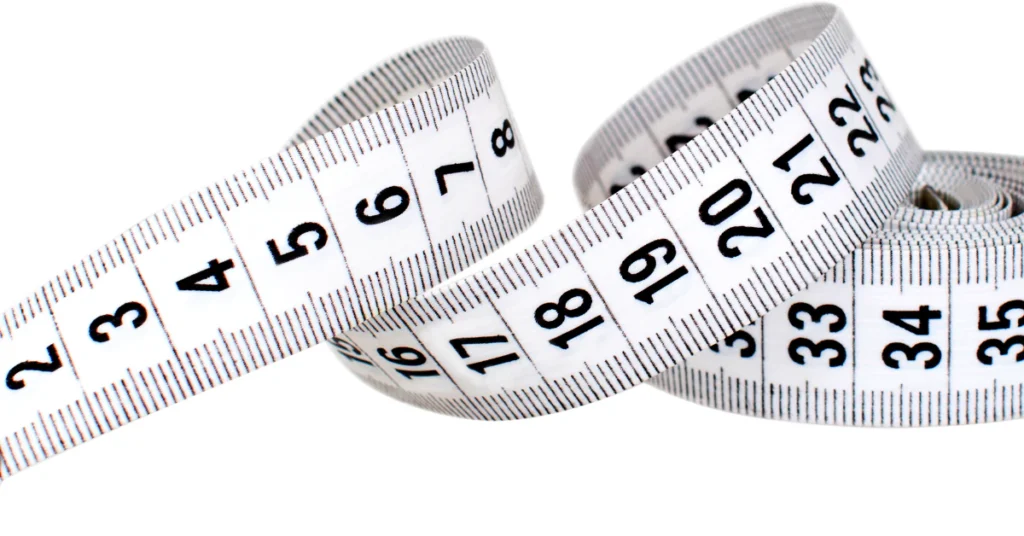
Sometimes you need a quick measurement and there’s no ruler in sight. Good news: your wallet and your own hand can both work as backup tools.
Here’s how to measure 4 inches without a ruler using things you already carry.
The Dollar Bill Trick
A US dollar bill is 6.14 inches long. Fold it into thirds, the way you’d fold a letter to fit an envelope. Two of those three folded sections together measure about 4.09 inches, which is close enough for most quick checks.
- Lay the bill flat on a table.
- Fold it into three equal sections, like a letter fold.
- Unfold it slightly and look at the crease lines, two of the three sections combined give you roughly 4 inches.
- Use that folded length against your object.
This works anywhere you have cash on hand, no app or tool needed.
The Hand Width Trick
Your own hand can work as a built-in ruler. The average adult hand, measured across the knuckles, is close to 3.5 to 4 inches wide.
- Spread your fingers slightly, keeping them relaxed.
- Measure straight across the widest part of your knuckles, not your fingertips.
- Compare that width to your object.
This method is less exact than a folded dollar bill, since hand size varies by person. Still, it’s useful when you have nothing else nearby.
Quick Reference Table
| Method | What You Need | Accuracy |
| Folded dollar bill | A US $1 bill | Close (about 4.09″) |
| Hand width | Your own hand | Rough estimate (3.5–4″) |
| Index card | A 4×6 index card | Exact (4″) |
| Credit card diagonal | Any standard card | Close (about 3.98″) |
Which One Should You Use?
If you want accuracy, grab an index card or a credit card from your wallet. If you only have cash or just your hands, the dollar bill fold and hand width trick will get you close enough for most everyday guesses, like sizing a craft supply or checking if something fits a drawer.
None of these methods replace an actual ruler for precise work. But for a fast visual check, they’ll get you there without digging through a toolbox.
Why Accurately Estimating 4 Inches Matters in Daily Life

Knowing how big is 4 inches isn’t just trivia. It saves you from real mistakes in situations where guessing wrong actually costs you something.
Take a haircut. You tell your stylist to take “4 inches off,” thinking that sounds safe. But if you don’t actually know what 4 inches looks like, you might end up with way more hair on the floor than you expected. Picturing that index card edge before your appointment can save you from a cut you’ll regret for months.
Online shopping is another trap. A product listing says an item is “4 inches tall,” and you picture it as bigger than it is. Then it arrives, and it’s smaller than your phone. This happens constantly with jewelry, figurines, and small home decor. A quick mental check against something like a credit card diagonal would have told you exactly what to expect.
DIY projects depend on this too. Say you’re hanging shelves or spacing out nails for a board. Most stud finders and spacing guides use 4-inch increments as a baseline. If you’re eyeballing it without a real sense of the length, your spacing ends up uneven, and the whole project looks off.
Crafting runs into the same issue. Scrapbooking, sewing, and gift wrapping often call for cutting material to a specific size. If you’re cutting fabric or paper “about 4 inches” without a clear reference, you’ll end up trimming pieces that don’t match, and that mismatch shows up in the finished product.
Even small tasks, like checking if a phone case fits a drawer or if a plant pot fits a windowsill, depend on a decent sense of scale. You don’t always have a ruler in your pocket, but you do have a credit card, an index card, or your own hand.
Once you’ve got a few solid reference points memorized, from your wallet, drawer, or desk, these small decisions stop being guesswork.
FAQs About a 4-Inch Measurement
How long is 4 inches in cm?
4 inches equals 10.16 centimeters. This comes from the standard conversion rate, where 1 inch always equals 2.54 cm. In millimeters, that’s 101.6 mm, and in feet, it’s about 0.33 ft.
Is 4 inches big or small?
4 inches is considered small to medium, depending on what you’re measuring. It’s small for things like furniture or room dimensions, but it’s a noticeable length for everyday items like a haircut trim, a craft stick, or a piece of jewelry. Context matters more than the number itself.
How can I measure 4 inches without a ruler?
You can use a folded US dollar bill, which comes out to about 4.09 inches when folded into thirds. Your hand width across the knuckles, roughly 3.5 to 4 inches, also works as a rough backup. For something more exact, an index card’s short edge or a credit card’s diagonal both measure close to or exactly 4 inches.
Is 4 inches common in daily life?
Yes, 4 inches shows up more often than most people realize. It matches everyday items like a toilet paper tube, a business envelope’s width, an electrical outlet box, and a standard paint roller. Because so many common objects happen to be this size, it’s one of the easier lengths to picture without a ruler.
What objects are about 4 inches long?
Several everyday items are close to 4 inches, including a toilet paper tube, a 4×6 index card’s short edge, a square Post-it note, a credit card’s diagonal, a No. 10 envelope’s width, and a 4-inch zip tie. Other close matches include four quarters lined up side by side, a craft stick, and a pocket comb. These objects make it easy to visualize the length without needing a measuring tool.
Conclusion
Now you’ve got a real sense of how long 4 inches actually is, not just a number on a screen. The next time you need a quick reference, you don’t need to search for a ruler. Just grab an empty toilet paper tube, pull a credit card from your wallet, or fold a dollar bill into thirds.
These small, everyday objects turn an abstract measurement into something you can see and feel. Whether you’re asking your stylist for a trim, sizing up an online order, or spacing out nails on a DIY project, you now have a handful of reliable visual anchors to lean on.
Keep one or two of these tricks in mind, and guessing 4 inches will never feel like guesswork again.