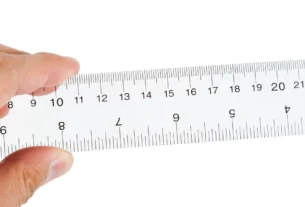
Eight inches equals 20.32 centimeters, or just about two-thirds of a foot. That’s the quick answer if you’re wondering how long is 8 inches in real terms. But numbers on a ruler don’t always click right away, so it helps to picture something you already know.
A standard chef’s knife blade runs exactly 8 inches long. A typical 16.9 oz water bottle stands about that tall too. Both make solid mental benchmarks when you don’t have a tape measure handy.
In this guide, you’ll get simple conversions, everyday object comparisons, and a few no-tools-needed tricks for estimating 8 inches using just your hand. By the end, you’ll be able to size things up fast, whether you’re shopping, cooking, or measuring a DIY project.
8 Inches in Different Units (Conversion Table)

If you’ve ever asked what is 8 inches in cm, the answer is simple: 20.32 centimeters. That’s a number worth remembering if you shop online, follow international recipes, or read product specs from brands outside the US.
Here’s a quick breakdown of 8 inches across the units you’ll run into most:
| Unit | Measurement |
| Centimeters | 20.32 cm |
| Millimeters | 203.2 mm |
| Feet | 0.666 feet |
| Meters | 0.2032 m |
So how long is 8 inches in feet? Just under two-thirds of a foot, which is why it’s easy to underestimate on a tape measure if you’re only thinking in whole feet.
These conversions matter for more than trivia. If you’re buying furniture from a European site, following a metric sewing pattern, or double-checking a woodworking cut, knowing the exact centimeter or millimeter value saves you from costly mistakes. A tiny rounding error can throw off an entire project once you scale it up.
For anyone who wants the official word on measurement standards, the National Institute of Standards and Technology keeps detailed records on how US customary units relate to the metric system. It’s a solid resource if you want to go beyond quick conversions and understand how these standards are maintained.
What Does 8 Inches Look Like? (Body Parts)

Your own body carries a few built-in rulers, and 8 inches shows up in a couple of surprisingly useful spots. Here’s how it maps onto hair length and hand size.
Hair
If you’re wondering how long is 8 inches of hair, think chin-length to collarbone. Measured straight down from the crown of the head, 8 inches typically lands somewhere between the jaw and the top of the shoulders, depending on hair texture and how it’s measured.
A few things to keep in mind:
- Straight hair shows the full 8 inches clearly, often reaching the collarbone.
- Wavy or curly hair shrinks upward with each curl pattern, so 8 inches of curly hair might only look chin-length or shorter once it dries.
- Extensions and wigs are usually measured when stretched straight, not styled, so always check the product description for “stretched length.”
This distinction matters most for anyone shopping for hair extensions or wigs. An 8-inch bundle sounds short on paper, but it can add noticeable length and volume, especially on shorter natural hair. If you’re going for a bob-to-collarbone look, 8 inches is usually the sweet spot brands recommend.
Hands
Stretch your hand out wide, thumb to pinky, and you’re looking at a rough 8-inch measuring tool. The average adult female hand span runs about 7.5 to 8 inches from thumb tip to pinky tip when fully spread.
This makes your hand a handy backup when you don’t have a tape measure nearby. A few practical uses:
- Estimating furniture gaps — checking if a gap between shelves or drawers is wide enough for an item.
- Sizing fabric or craft materials on the fly.
- Double-checking product dimensions while shopping in person, without pulling out your phone.
It’s not going to replace a proper ruler for precise work, but for a fast, rough estimate, your hand span gets you close enough. Just remember that hand size varies by person, so it’s worth measuring your own span once with an actual ruler. That way you know exactly how your hand compares to the standard 8-inch mark, and you can rely on it with more confidence going forward.
Common Everyday Objects That Are Exactly 8 Inches Long

If someone asks what object is 8 inches long, you don’t need a tape measure to answer. Plenty of things sitting in your kitchen or garage right now are already that size, standardized for practical reasons that go back decades.
Kitchen Tools
8-Inch Chef’s Knife Blade
The most common blade length for a chef’s knife in the US is exactly 8 inches. It’s the size most culinary schools train with, and for good reason.
- An 8-inch blade is long enough to slice through a whole onion or squash in one smooth motion.
- It’s short enough to control comfortably, even for home cooks without professional training.
- The Victorinox Fibrox Pro 8-Inch Chef’s Knife is a widely used industry example, favored by both home cooks and professional kitchens for its balance and precision.
This length became the standard because it hits a sweet spot. Anything longer gets unwieldy on a home cutting board, and anything shorter struggles with bigger vegetables or cuts of meat.
16.9 fl oz (500 ml) Water Bottle
Grab a standard plastic water bottle, the kind you’d buy in a 24-pack, and you’re holding something close to 8 inches tall. Brands like Dasani and Poland Spring package their 500 ml bottles at roughly this height.
- It’s a go-to visual reference because almost every American household has one in the fridge or a car cupholder.
- Next time you want to answer how long is 8 inches compared to an object, just picture that bottle standing upright.
Bottle manufacturers land on this height because it balances how much liquid fits, how the bottle feels in your hand, and how many can fit on a store shelf or in a cooler.
Construction & Building Materials
Standard US Modular Brick
In construction, a standard US modular brick has a nominal length of 8 inches. The actual brick usually measures about 7 5/8 inches, but builders round it to 8 inches once you factor in the mortar joint between bricks.
- This nominal sizing keeps math simple for contractors laying out walls, since 8-inch units divide evenly into standard wall lengths.
- It’s one reason brick construction has stayed consistent across the country for generations. Everyone building with modular brick works from the same base number.
If you’ve ever watched a bricklayer work quickly without measuring every single piece, this standardized 8-inch nominal length is why.
Baking & Kitchenware
8-Inch Cake Pan
Bakers rely on the 8-inch cake pan constantly, and for anyone baking at home, it’s probably the most-used pan size in the cabinet.
- An 8-inch round pan holds enough batter for a proper layer cake without towering awkwardly.
- Recipe books default to this size because it produces a cake that bakes evenly all the way through, without a dry edge or raw center.
- It’s also the easiest size to frost and stack for layer cakes, since the diameter keeps each layer stable.
Whether you’re comparing a knife blade, a water bottle, a brick, or a cake pan, the same theme keeps showing up: 8 inches is a size manufacturers and builders keep coming back to because it works. It’s long enough to be useful, short enough to stay manageable, and consistent enough that an entire industry can build around the number without confusion.
How to Measure 8 Inches Without a Ruler
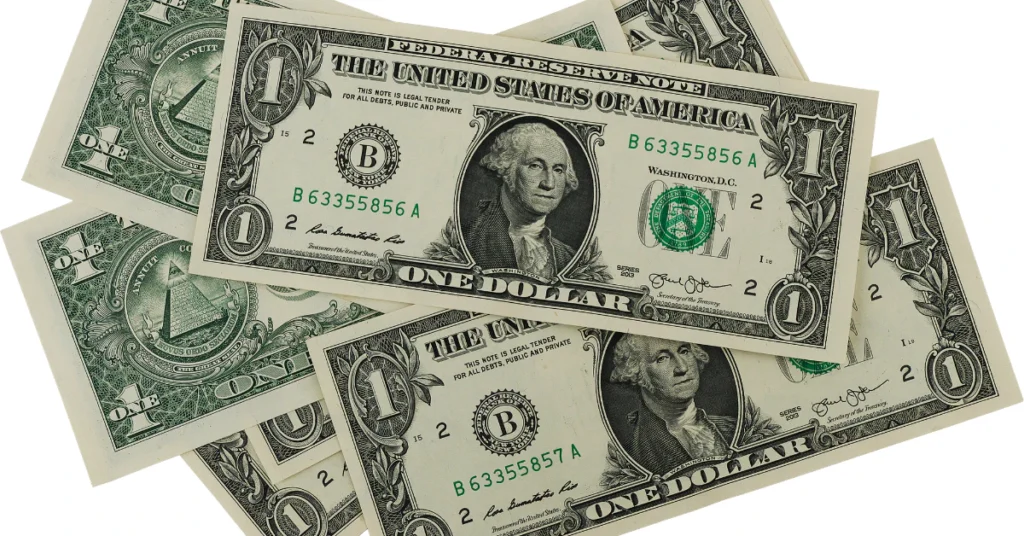
No tape measure in sight? A few everyday items can get you a close enough estimate for most quick jobs.
Use a standard water bottle
A 16.9 fl oz plastic water bottle stands about 8 inches tall. If you’ve got one on your desk or in your bag, stand it up next to whatever you’re measuring.
- Line the bottle’s base up with one edge of the object.
- Check where the cap lands on the other end.
- If it matches up closely, you’re looking at roughly 8 inches.
Use a dollar bill
A US dollar bill measures 6.14 inches long, which makes it a solid starting point.
- Lay the bill flat against the object.
- Add the width of your thumb (roughly 1 inch for most adults) past the end of the bill.
- Add a little more, about another inch, to round up to 8 inches total.
This trick works best when precision isn’t critical, like eyeballing furniture placement or checking if something fits in a bag before you leave the house.
Use a sheet of paper
Standard US letter paper measures 8.5 by 11 inches.
- Lay the paper down so the 8.5-inch side runs along the object you’re measuring.
- That gives you a very close reference to 8 inches, just slightly over.
- Fold the paper in half along the shorter side if you need a smaller reference point instead.
A few quick tips:
- Combine methods when you can. A bottle plus a quick eyeball check is more reliable than a bill alone.
- These hacks are great for fast estimates, not for tasks like construction or sewing where exact measurements matter.
- Once you get a feel for what 8 inches looks like using these objects, you’ll start eyeballing it accurately without needing any tool at all.
Why 8 Inches is a Standard Measurement in the US
Eight inches keeps showing up across American products for a reason. It’s not random. It’s a size that plays well with how the Imperial system works.
A foot splits neatly into thirds, halves, and quarters. Eight inches happens to land at two-thirds of a foot. That makes it easy to work with when scaling designs up or down, whether you’re a builder, a baker, or a manufacturer planning a product line.
This is part of why 8-inch cake pans became a kitchen staple. It’s also why modular bricks use an 8-inch nominal length. The number fits cleanly into larger building plans without forcing awkward math on-site.
Manufacturers lean on this same logic outside the kitchen and construction site too. Small tablet screens, for example, often land near the 8-inch mark measured diagonally. It’s a size that feels compact in hand but still large enough to stay functional.
None of this happened by accident. Standard sizes exist so different industries, factories, and even countries can build things that fit together without constant custom adjustments. Once a measurement like 8 inches gets baked into tools, recipes, and building codes, it tends to stick around.
That’s the real reason this number feels so familiar. It’s not just common by chance. It’s common because it works well within a system built on easy, practical divisions.
FAQs
What does 8 inches look like?
It’s about two-thirds of a foot, roughly the height of a standard water bottle or the length of a chef’s knife blade. Visually, it’s a bit longer than a dollar bill plus a thumb’s width.
How can I measure 8 inches without a ruler?
Grab a 16.9 oz water bottle, a dollar bill (6.14 inches) plus about two thumb-widths, or the 8.5-inch side of standard letter paper. Any of these gets you a close estimate without pulling out a tape measure.
What are some things that are 8 inches?
A chef’s knife blade, a standard plastic water bottle, a modular brick’s nominal length, and a round cake pan diameter all land right at 8 inches. These sizes are common precisely because they’re standardized across kitchens and construction sites.
What is comparable to 8 inches?
Think of an adult’s stretched hand span, thumb tip to pinky tip, which averages 7.5 to 8 inches. A sheet of paper’s shorter side (8.5 inches) is also a close comparison, just slightly longer.
How long is 8 inches visually?
Picture a small cake pan sitting on a counter, or a water bottle standing upright next to your keyboard. Both give you an instant visual anchor without needing to picture abstract numbers.
How long is 8 inches in hand?
Stretch your hand as wide as it goes, from thumb tip to pinky tip. For most adults, especially women, that span lands close to 8 inches, making your own hand a quick built-in reference tool.