30 cm equals 11.81 inches, or about 11 13/16 inches if you’re reading a tape measure. That’s the number you need, and it’s not a rough estimate, it’s exact math.
So how long is 30 cm in terms you actually use day to day? It’s close to a foot, but not quite. A lot of people assume is 30 cm equal to 12 inches, since both show up on the same ruler, but there’s a small gap between them that actually matters for precise work like woodworking or sewing.
Metric to imperial conversions trip up a lot of US readers, and honestly, it’s not your fault. The two systems just don’t line up neatly. In this guide, we’ll break down the exact conversion, show you where the confusion with 12 inches comes from, and give you real objects you already own to picture exactly how long 30 cm really is.
What is 30 cm in Inches? (Visual Guide & Exact Math)

30 cm converts to exactly 11.81 inches, or 11 13/16 inches on a standard tape measure. No rounding tricks needed, that’s the precise figure.
If you’ve ever wondered how long is 30 cm compared to things you use every day, you’re not alone. It sits in an awkward middle ground, shorter than a standard foot but longer than most people guess at a glance. Some readers even ask if is 30 cm equal to 12 inches, probably because both numbers appear on the same ruler, but they’re actually two slightly different lengths.
Switching between metric and imperial units isn’t always intuitive, especially for US readers who grew up on inches and feet. It’s a common mix-up, and there’s a reason for it. This guide walks through the exact math behind the 30 cm conversion, clears up the confusion with the 12-inch comparison, and gives you everyday objects to help you picture the size without needing a ruler in hand.
Why 30 cm is a Global Benchmark
30 cm shows up everywhere because it sits so close to the 1-foot mark used in the Imperial system. Since 12 inches equals 30.48 cm, the two numbers are nearly interchangeable for everyday purposes, even though they’re not technically identical. This small overlap makes 30 cm a practical middle ground between the metric and imperial worlds.
That’s one reason manufacturers lean on it so heavily. School rulers are a perfect example, most are printed with 30 cm on one edge and 12 inches on the other, letting students and professionals switch between systems without carrying two separate tools. The same logic applies to cutting boards, picture frames, and shelving units, where a 30 cm size works as a rough stand-in for a 1-foot measurement in either country.
Paper sizing follows a similar pattern. Standard A4 paper measures 29.7 cm long, which rounds almost perfectly to 30 cm, and it’s used across most of the world outside the US.
Because it lines up so closely with a familiar imperial benchmark while staying a clean, round metric number, 30 cm has become a default reference point for design, education, and manufacturing worldwide.
10 Everyday Objects That Are Exactly (or Almost) 30 cm
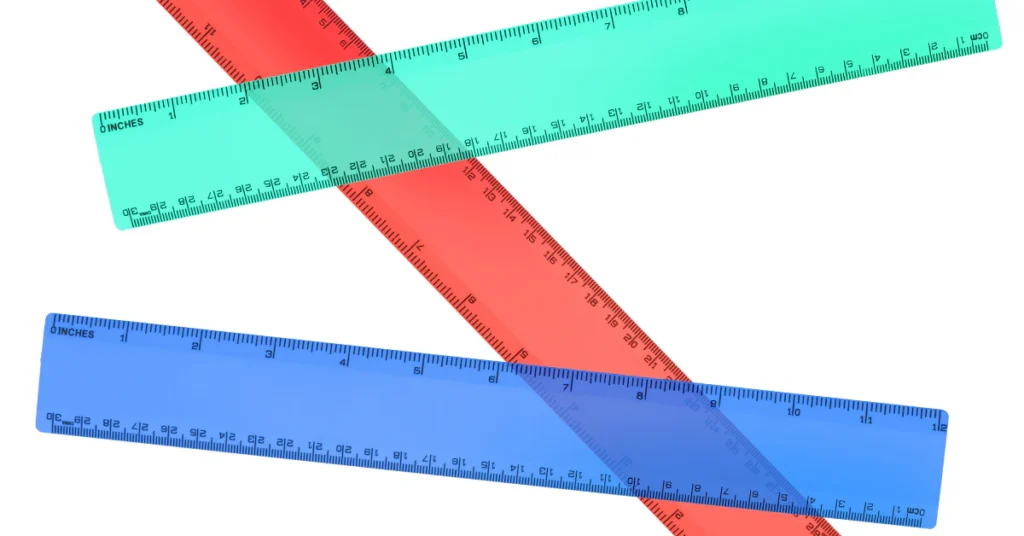
Numbers on a screen don’t always stick, but objects you’ve touched a hundred times do. Here are 10 objects that are 30 cm long, or close enough to give you a real sense of scale.
A Standard School Ruler
This is the easiest one. Most rulers sold for school use are printed with two sides, one marked in centimeters up to 30, and one marked in inches up to 12. Flip it over and you’ll see both numbers lined up almost edge to edge, which is exactly why so many people assume they’re the same length.
A4 Paper Length
If you’ve got a printer at home or work, you’ve got a close reference sitting right there. A standard A4 sheet measures 29.7 cm long, according to Adobe’s official paper size guide, which is practically 30 cm. Lay a sheet down lengthwise and you’re looking at almost the exact measurement.
A 12-inch Vinyl LP
Record collectors already know this number by heart. A standard 12-inch vinyl LP has a diameter of 30.48 cm, as confirmed by Vinyl Unity’s format guide. It’s one of the most precise real-world matches to the 12-inch mark, just slightly longer than 30 cm itself.
A 2-Liter Soda Bottle
Reach into the fridge and you’ll find another decent reference. A standard 2-liter soda bottle typically stands 30 to 32 cm tall, depending on the brand and bottle design. It won’t be exact, but it’s close enough to get a feel for the height.
A Subway Footlong Sandwich
The name gives it away. A “footlong” sandwich is designed to target 12 inches, or 30.48 cm, in length. In practice, bread can vary slightly from sandwich to sandwich, but the target length puts it right in the same range as everything else on this list.
Men’s Shoe Size 12-13
Here’s one you might be able to check right now. A US men’s shoe in size 12 to 13 has a foot length of roughly 30 cm. If you or someone in your house wears that size, you’re looking at a built-in 30 cm reference every time you take your shoes off.
A Small Shelf or Two Skateboards End to End
Skateboards aren’t a precise measurement on their own, but doubling the width of a standard board, or lining up two side by side, gets you into the 30 cm range. The same goes for a small wall shelf, many of the compact shelves sold for books or decor are built close to 30 cm wide, since it’s a practical size for tight spaces.
A Standard Floor Tile
Floor and ceiling tiles are commonly sold in 12×12 inch squares, which puts each side at 30.48 cm. Walk across a tiled kitchen or bathroom floor and count the tiles, each one is roughly the length you’re trying to picture.
A Keyboard Depth
Most full-size computer keyboards run close to 30 cm from front to back. It’s not a fixed industry standard the way paper sizes are, but if you’ve got a keyboard on your desk, measuring its depth will land you in the right neighborhood.
A Medium Pizza Diameter
Pizza sizing varies by shop, but a medium pizza is commonly sold at a 12-inch diameter, matching the familiar 30.48 cm mark. Next time you order, picture the box, the diameter of that pizza is about as long as the measurement you’re trying to visualize.
So how big is 30 centimeters visually, in simple terms? It’s the length of a sheet of printer paper, the diameter of a vinyl record, the height of a soda bottle, and just a touch shorter than a 12-inch ruler. Once you connect it to things you already own, the number stops being abstract and starts being something you can actually picture without checking a tape measure.
Practical Use Cases: Where 30 cm Matters

Knowing this conversion isn’t just trivia, it actually comes up more often than you’d expect, especially if you’re ordering products, following instructions, or helping with homework that uses the metric system.
DIY & Home Improvement
If you’ve ever shopped for materials from a European supplier, you’ve probably run into centimeters where you’d normally expect inches. PVC pipes, shelving brackets, and cabinet hardware are common examples. Cutting a pipe to 30 cm when your saw and tape measure are marked in inches means you need the exact conversion, not a rough guess, or your fitting won’t line up. The same goes for installing shelves, a bracket spaced 30 cm apart will sit slightly differently than one spaced a full 12 inches apart, and that small gap can throw off an entire layout if you’re working across multiple shelves.
Fashion & Clothing
Clothing sized by international brands, especially from Asian and European retailers, often lists measurements in centimeters instead of inches. Chest width, sleeve length, and inseam are the three spots where this trips people up most. A sleeve listed at 30 cm isn’t the same as 12 inches, and if you’re ordering online without trying it on first, that nearly half-inch difference can be the gap between a good fit and a return shipment. Checking the exact conversion before you order saves you the hassle of guessing.
School & Science
Science classes lean on the metric system for almost everything, from measuring liquids to recording lab results. Students often need to convert those numbers back into inches or feet for worksheets or take-home assignments that still use US units. A measurement of 30 cm on a lab handout needs to become 11.81 inches on paper, and getting that conversion right matters for accuracy, especially in classes where measurement precision affects the final grade. Teachers and parents helping with homework run into this constantly, and having the exact figure on hand makes the whole process faster.
Whether you’re building something, buying clothes, or helping with a science assignment, the 30 cm to inches conversion shows up in more corners of daily life than most people realize.
How to Estimate 30 cm Without a Ruler
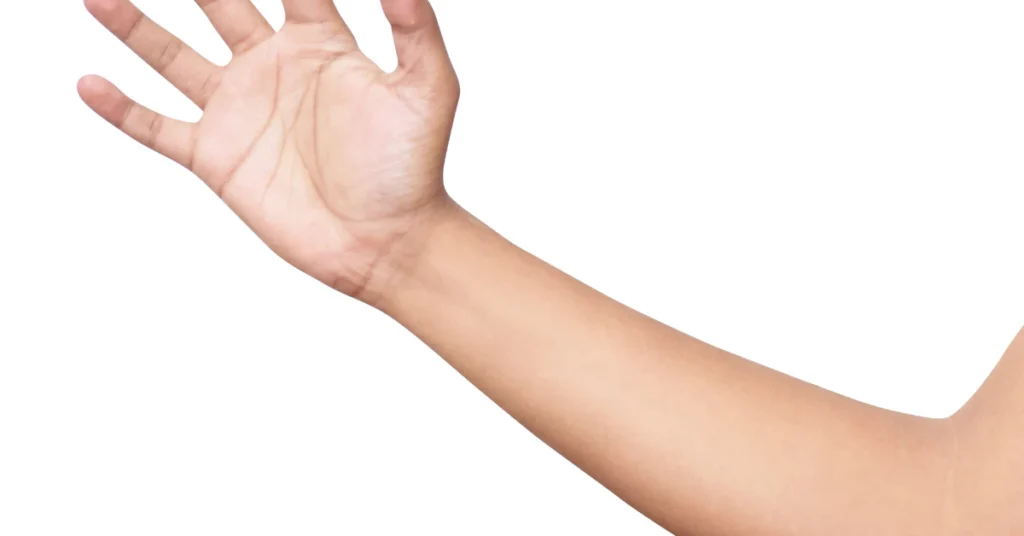
Don’t have a 30 cm to inches ruler on hand? Your own body can get you pretty close, no tools required. These tricks won’t replace an actual measurement when precision matters, but they’re handy for a quick estimate.
The Forearm Trick
For many adults, the distance from the inside of the elbow to the wrist lands somewhere around 30 cm. It’s not an exact science, forearm length varies from person to person, but it’s a surprisingly useful shortcut when you need a rough measurement and don’t want to dig through a drawer looking for a ruler. Next time you’re trying to picture 30 cm, hold your arm out and take a look.
The Hand Span Trick
Here’s another one worth trying. Stretch your hand out wide, thumb to pinky, and measure two of those spans back to back. For an average adult hand, that combination lands close to 30 cm. It’s a bit less reliable than the forearm trick since hand sizes vary more widely, but it’s still a fun way to visualize the length when you’re out shopping or working on a quick project.
Both methods are rough estimates, not replacements for an actual ruler or tape measure. But when you’re standing in a store trying to picture whether something will fit a space, your forearm and your hand span are tools you’re always carrying with you.
Frequently Asked Questions
Is 30 cm the same as 12 inches?
No. 12 inches is exactly 30.48 cm, while 30 cm equals 11.81 inches. They’re close, but not identical, 30 cm is slightly shorter than a full foot.
How do you find 30 cm on a US tape measure?
Look for the 11-inch mark on your tape measure, then count 13 small tick marks past it. That lands you at 11 13/16 inches, which is the closest practical reading for 30 cm.
What household item is exactly 30 cm long?
A standard school ruler is the closest match. Most rulers are printed with centimeter markings up to 30 cm on one edge, making it the easiest exact reference to grab around the house.
Conclusion
30 cm comes out to 11.81 inches, or 11 13/16 inches on a standard tape measure, close to a foot but not quite the full 12 inches. Whether you’re cutting materials, ordering clothes sized in centimeters, or helping with a science worksheet, having the exact number on hand saves you from guessing. And if you ever need a quick estimate without a ruler nearby, your forearm or a couple of hand spans will get you close enough to work with.