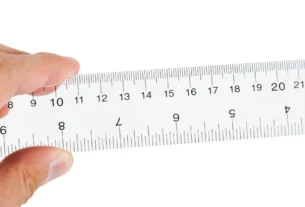
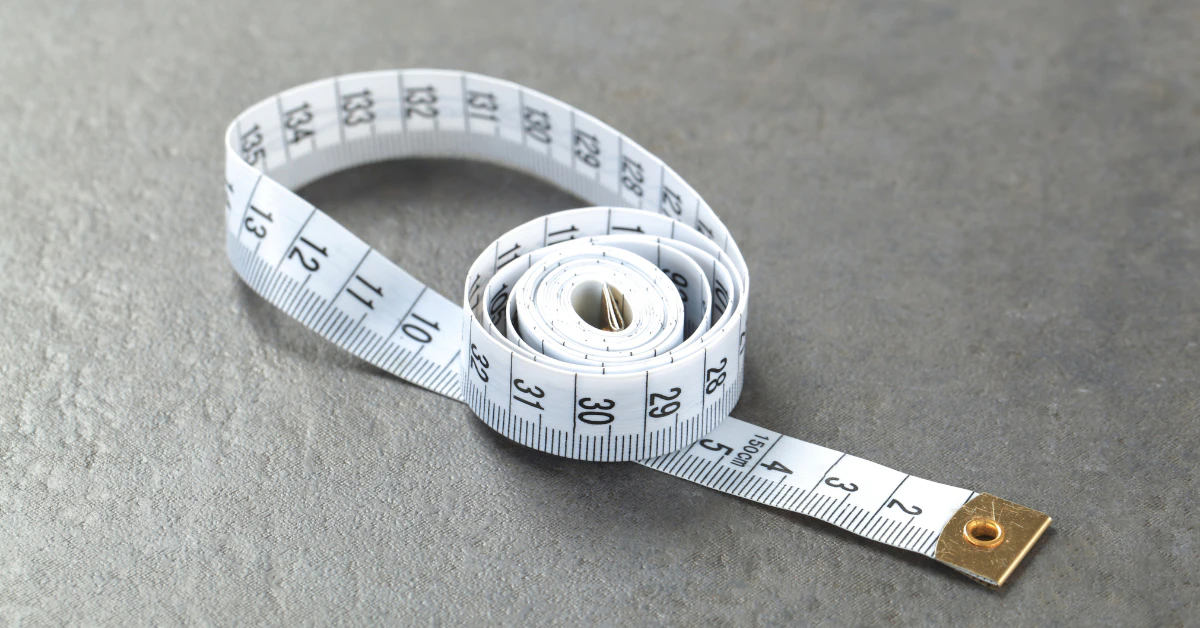
Four centimeters equals exactly 1.57 inches, or 40 millimeters. That’s the same width as a regulation ping pong ball, so if you’ve ever held one in your hand, you already know the size. No guesswork needed here, just a clean, exact number you can trust.
So how big is 4 cm in real terms? On a ruler, it lands just past the 1.5 inch mark, at 1 and 9/16 inches. It’s small enough to fit between two fingers, yet large enough to matter when a doctor mentions it in a scan result or when you’re measuring something for a DIY project. Whether you’re checking a medical report, sizing up a craft item, or just curious, this number shows up more often than people expect.
Before we compare it to everyday objects, here’s the full breakdown of what 4 cm looks like across every common unit of measurement, based on the exact metric standards set by the National Institute of Standards and Technology.
4 Centimeters Conversion Table
| Unit | Value |
| Millimeters | 40 mm |
| Inches | 1.57 in (1 and 9/16 in) |
| Feet | 0.1312 ft |
| Yards | 0.0437 yd |
| Meters | 0.04 m |
How Long Is 4 cm on a Ruler? (Inches & Feet Breakdown)
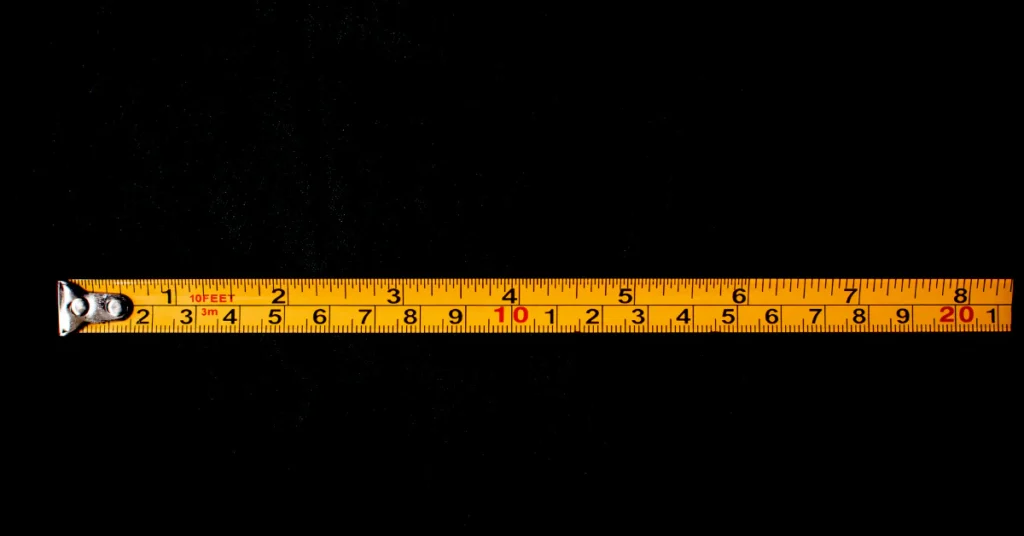
Most US rulers don’t show decimals at all. Instead, they’re marked in fractions like 1/16, 1/8, 1/4, and 1/2 inch. This trips people up when they’re trying to convert a metric number like 4 cm into something they can actually find on a physical ruler.
Here’s the trick. Since 4 cm equals 1.57 inches, you first find the 1.5 inch mark, which is the same as 1 and 1/2 inches. That’s an easy line to spot since it sits right between the 1 and 2 inch marks. From there, count just one small tick forward, the smallest 1/16-inch line on the ruler. That single tick brings you to 1 and 9/16 inches, or 1.5625 inches. That’s as close as a standard ruler gets to 4 cm, off by a tiny fraction too small to matter for everyday use.
So next time someone asks how long is 4 cm on a ruler, the answer is simple: find 1 and 1/2 inches, move one tick to the right, and you’re there.
In terms of feet, 4 cm works out to 0.1312 feet. That’s a small number because a foot is a much bigger unit. To picture it, imagine a standard 12-inch ruler. Four centimeters takes up only about 1/8th of that entire length. It’s a small slice of a ruler, but as the next sections show, it matches quite a few familiar objects.
10 Everyday Objects That Are 4 Centimeters Long (Exact & Close Matches)

Numbers on a page are one thing, but holding something in your hand makes a measurement click. Below are ten real, standardized objects that measure close to 4 cm, ranked from exact matches to slightly larger or smaller.
| Object | Size | Difference from 4 cm |
| Ping Pong Ball | 4.0 cm | Exact match |
| LEGO Minifigure | 4.0 cm | Exact match |
| Matchbox Width | 4.0 cm | Exact match |
| Poker Chip | 3.9 cm | 1 mm under |
| Two Pennies | 3.81 cm | 2 mm under |
| Two Nickels | 4.24 cm | 2.4 mm over |
| Golf Ball | 4.27 cm | 2.7 mm over |
| AAA Battery | 4.45 cm | 4.5 mm over |
| Binder Spine | 3.81 cm | 2 mm under |
| Apple Watch Case | 4.0 cm | Exact match |
A Regulation Ping Pong Ball (Exact Match, 4.0 cm)
Under official ITTF rules, every tournament-grade table tennis ball must measure exactly 40 mm across. That makes it one of the most precise real-world stand-ins for 4 cm you’ll find anywhere, since there’s no rounding involved at all.
A Standard LEGO Minifigure (Exact Match, 4.0 cm)
A classic LEGO minifigure stands exactly 4 cm tall, measured from the bottom of its feet to the top of the head stud. That height equals four standard LEGO bricks stacked on top of each other, which is handy if you’ve got a bin of bricks lying around and want a quick visual.
The Width of a Standard Matchbox (Exact Match, 4.0 cm)
A traditional pocket wooden matchbox measures about 40 mm across its width, and a standard wooden safety matchstick runs close to the same length. If you’ve got a box of matches in a kitchen drawer, it’s a surprisingly convenient reference.
A Standard Casino Poker Chip (3.9 cm, Just 1 mm Under)
Official US casino chips measure 39 mm in diameter. That’s just a single millimeter short of 4 cm, close enough that the difference is nearly impossible to spot without a caliper.
Two U.S. Pennies Side by Side (3.81 cm, Just 2 mm Under)
According to the United States Mint’s official specifications, a single penny measures 19.05 mm across. Line up two pennies flat next to each other and you get 38.1 mm, or 3.81 cm, just under 2 mm short of the full 4 cm mark.
Two U.S. Nickels Side by Side (4.24 cm, Just Over 4 cm)
Nickels are slightly bigger than pennies, each measuring 21.21 mm. Two nickels placed side by side add up to 42.42 mm, or 4.24 cm, putting them just a bit over the 4 cm line rather than under it.
A Regulation Golf Ball (4.27 cm, Slightly Larger)
USGA rules require a golf ball to have a minimum diameter of 1.68 inches, or 42.67 mm. That’s roughly 2.7 mm larger than 4 cm, which means a golf ball is noticeably bigger once you set it beside something like a ping pong ball.
A Standard AAA Battery (4.45 cm, About 4.5 mm Over)
A standard AAA battery measures 44.5 mm in length under ANSI specifications. That puts it around 4.5 mm longer than 4 cm, making it one of the larger items on this list while still being a close, everyday comparison.
A Standard 1.5-Inch Three-Ring Binder Spine (3.81 cm)
The spine width on a typical 1.5-inch three-ring binder measures out to about 3.81 cm. It’s a common item sitting on office shelves and in backpacks, making it an easy one to check without needing a ruler at all.
An Apple Watch Face (40 mm Series Case Height, Exact 4.0 cm)
The 40 mm Apple Watch case size is named for a reason. Its case height measures exactly 40 mm, or 4 cm, making it one of the most recognizable modern tech objects that lines up perfectly with this measurement.
How Big Is 4 cm Compared to a Fruit? (Medical & Everyday Context)

When it comes to fruit, a whole in-shell walnut is one of the closest natural matches to 4 cm. A large apricot or a small plum lands in that same range too. These aren’t rough guesses, they’re the same reference points doctors and health resources often use because most people already know roughly what these fruits look like.
That’s exactly why you’ll often hear a doctor describe a 4 cm cyst, fibroid, or tumor by comparing it to a walnut. The National Cancer Institute uses fruit and object comparisons in its own visual size charts for this reason. Medical terms and raw centimeter numbers can feel abstract or even frightening on their own, but picturing a walnut sitting in your hand gives you something concrete to hold onto, without the number feeling any scarier than it needs to be.
The same idea shows up in pregnancy and labor. When a doctor says someone is 4 cm dilated, that measurement is sometimes compared to the width of a round Ritz cracker, or again, a walnut. It marks a recognizable point in early active labor, and having a familiar visual can make a clinical number easier to process in the moment.
A quick note: these comparisons are meant purely to help you visualize size. They are not a substitute for medical advice, so always talk to your doctor about what a specific measurement means for your own health.
How to Estimate 4 Centimeters Without a Ruler (3 Quick Hacks)

No ruler in sight? These three tricks use things you almost always have on hand, your fingers, your spare change, or your wallet, to get a solid estimate of 4 cm anywhere you happen to be.
The Two-Finger Width Trick
Press your index and middle finger together, side by side, and look at the combined width at the first knuckle. On an average adult hand, that width comes out to right around 4 cm, or 1.57 inches. It’s not lab-precise, but it’s close enough for a quick gut check, and your hand is one tool you never leave at home.
The Pocket Change Method
This one is more exact than most people realize. A US penny measures 19.05 mm and a nickel measures 21.21 mm. Line the two up edge to edge and you get 40.26 mm, which works out to 4.02 cm, just 0.2 mm off from the real thing. If you’ve got a penny and a nickel in your pocket right now, you already have a near-perfect measuring tool.
The Standard Credit Card Trick
A standard credit card measures 85.6 mm in length. Fold that length in half, at least in your mind, and you land on 4.28 cm. It’s a touch larger than a true 4 cm, but for a fast estimate using something that’s almost always in your wallet, it gets you close enough to be useful.
Frequently Asked Questions About 4 Centimeters
Is 4 centimeters bigger than 1.5 inches?
Yes. 1.5 inches equals 3.81 cm, while 4 cm equals 1.57 inches. That means 4 cm is slightly longer, by about 1/16th of an inch, which is one small tick mark on a standard ruler.
What everyday object is exactly 4 cm?
A regulation ping pong ball, a LEGO minifigure, and a 40 mm Apple Watch case all measure exactly 4 cm. A US penny and nickel placed side by side also land almost exactly on 4 cm.
How big is a 4 cm tumor or cyst in real life?
A 4 cm tumor or cyst is roughly the size of a whole in-shell walnut, measuring 1.57 inches across. Doctors often use this comparison to help patients picture the size without relying on numbers alone.
How do I find 4 cm on an inch ruler?
Locate the 1.5-inch mark on a standard ruler, then move one small 1/16-inch tick to the right. That lands you at 1 and 9/16 inches, which equals 4 cm almost exactly.
What is 4 cm in feet?
4 cm equals 0.1312 feet. That’s just under one-eighth of a standard 12-inch ruler, making it a small fraction of a foot in practical terms.
Why do online stores list small items in centimeters?
Many global manufacturers and international retailers use the metric system by default. Millimeters and centimeters offer cleaner, more precise measurements for small items than working with inch fractions.
Four centimeters might seem like a small number on paper, but it shows up everywhere once you start looking, from a ping pong ball in your junk drawer to a line on a medical report. With the ruler trick, the pocket change method, and a few familiar objects in mind, you’ll never have to wonder about this measurement again.