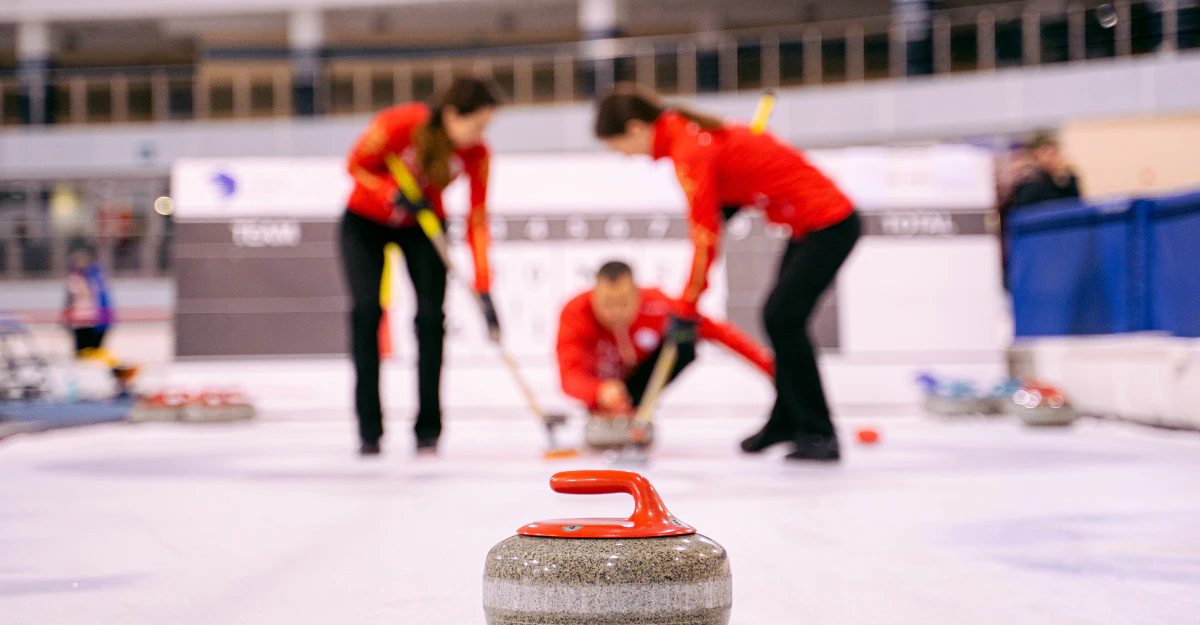
A regulation curling stone weighs between 38 and 44 pounds (17.24 to 19.96 kilograms), with most stones used in top level play landing at an average of 42 pounds (19.1 kg). That’s the full answer to how much does a curling stone weigh, straight from the official rulebook. No extra padding needed.
This exact range comes from World Curling’s Rule R2a, the governing standard every certified stone must meet before it touches Olympic ice. The rule covers total weight, including the handle and bolt, not just the bare granite. It also locks in the stone’s size, so every rock on the sheet curls and reacts the same way, whether you’re asking about curling stone weight kg or pounds.
Here’s the full breakdown of weight and size, in both US and metric units, so you can skip the math.
Official Curling Stone Weight and Dimensions at a Glance
| Measurement | US Customary | Metric |
| Minimum Weight | 38 lbs | 17.24 kg |
| Maximum Weight | 44 lbs | 19.96 kg |
| Average Olympic Weight | 42 lbs | 19.1 kg |
| Full Set of 16 Stones | 672 lbs | 304.8 kg |
| Maximum Circumference | 36 in | 914 mm |
| Maximum Diameter | ~11.46 in | 291 mm |
| Minimum Height | 4.5 in | 114 mm |
| Running Band Diameter | ~5 in | 127 mm |
How Much Does an Olympic Curling Stone Weigh? (Granite vs. Handle)
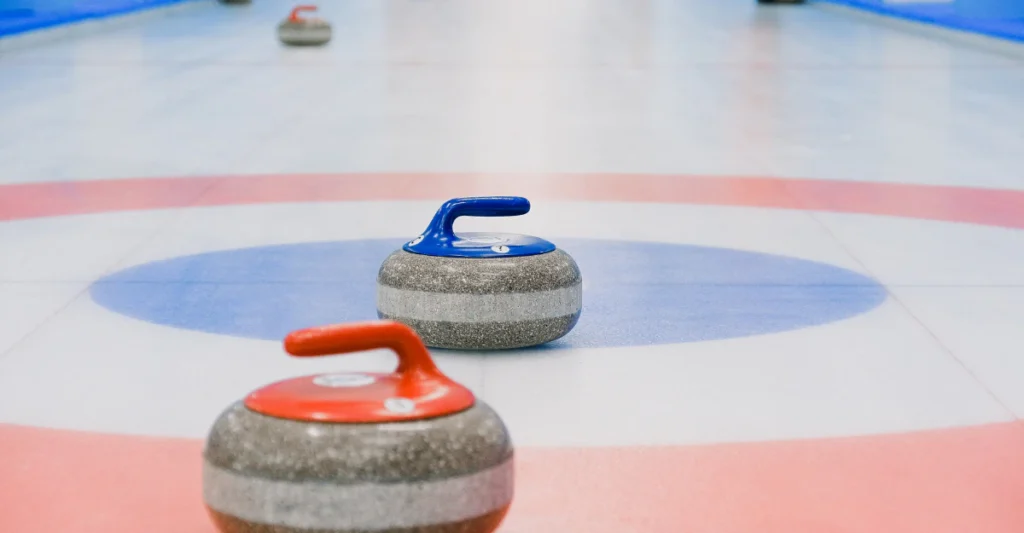
Rule R2a gives a six-pound window, from 38 to 44 lbs, but Olympic teams don’t just grab any stone in that range. Every rock on the ice is carefully matched to land close to 42 pounds (19.1 kg), so no single stone curls faster, slides farther, or hits harder than the rest of the set. That consistency matters more than the exact number itself.
To get there, two separate parts are weighed and combined. The bare polished granite body accounts for most of the mass, usually 38 to 41 pounds (17.2 to 18.6 kg) on its own. The rest comes from the top assembly: a colored plastic handle (red or yellow, marking team and rock), a steel bolt running down through the center, a rubber gasket, and in Olympic play, a battery powered sensor that detects hog line violations. Together those pieces add 1.5 to 3 pounds (0.68 to 1.36 kg).
Add it up and you get a stone that’s almost entirely rock, with just a small fraction of its weight in hardware sitting on top.
Everyday Items That Weigh the Same as a Curling Rock
A 42-pound stone isn’t an abstract number. It matches things most Americans already have around the house:
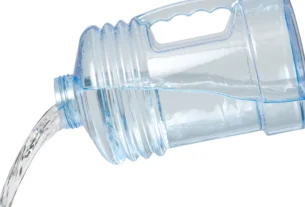
- One full 5-gallon water cooler jug (about 41.7 lbs)
- A 40-pound bag of dog food or water softener salt, plus a couple soup cans
- 131 regulation baseballs, or 101 softballs, stacked together
- A large countertop microwave oven
- An average 4- to 5-year-old child
None of those feel impossible to lift. That’s the point, and it matters for the next section, since curlers never actually lift the stone during play.
Do Women, Kids, and Wheelchair Curlers Use Lighter Stones?
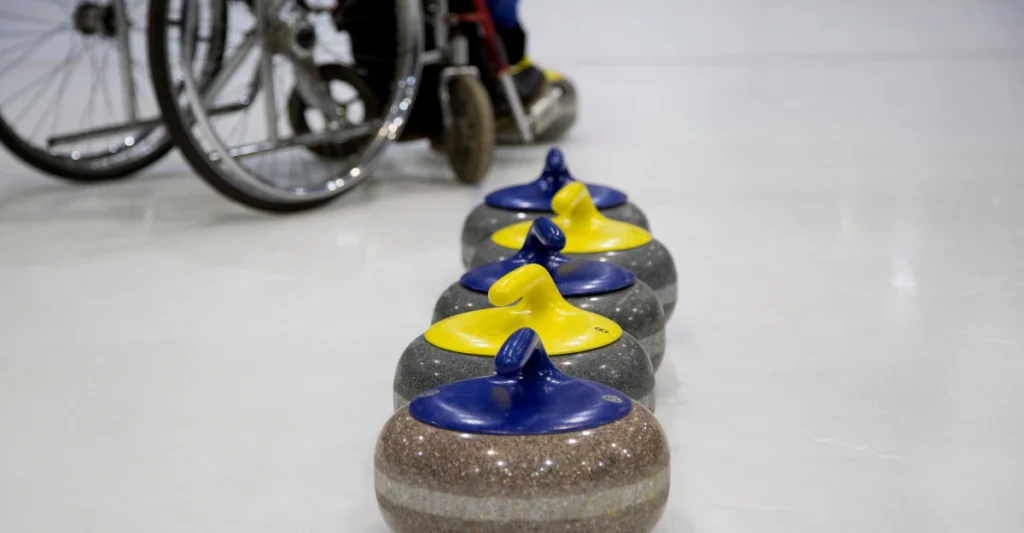
No. Men, women, mixed doubles, and Paralympic wheelchair curlers all play with the same regulation stone, weighing up to 44 pounds and averaging 42 pounds (19.1 kg). There’s no separate lighter version for any adult category. The stone doesn’t change; the delivery does.
Wheelchair curlers never lift the rock at all. They stay seated and push the stone forward using either a gloved hand or a long extender stick that hooks onto the handle. There’s also no sweeping in wheelchair curling, so the whole shot comes down to release angle and touch, not strength.
Where weight actually does change is with younger players, and the engineering behind it answers a question a lot of people ask online.
Junior / Bantam “LiteRock” Stones keep the full 36-inch circumference of an adult stone, so the rock still hits, curls, and reacts the same way on the ice. The difference is on the inside: the granite is hollowed out, cutting the weight down to 25 pounds (11.34 kg) without shrinking the rock itself. That lets young curlers practice real shots and real angles without wrestling adult-level weight.
Youth “Little Rocks” go a step further for players under 12, coming in smaller and lighter at 19 to 22 pounds (8.6 to 10 kg).
| Player Category | Stone Type | Weight (lbs) | Weight (kg) |
| Men / Women / Mixed Doubles | Regulation Stone | 38–44 | 17.24–19.96 |
| Wheelchair Curling | Regulation Stone | 38–44 | 17.24–19.96 |
| Junior / Bantam | LiteRock | 25 | 11.34 |
| Under-12 | Little Rock | 19–22 | 8.6–10 |
What Is a Curling Stone Made Of? (Why Granite Density Matters)
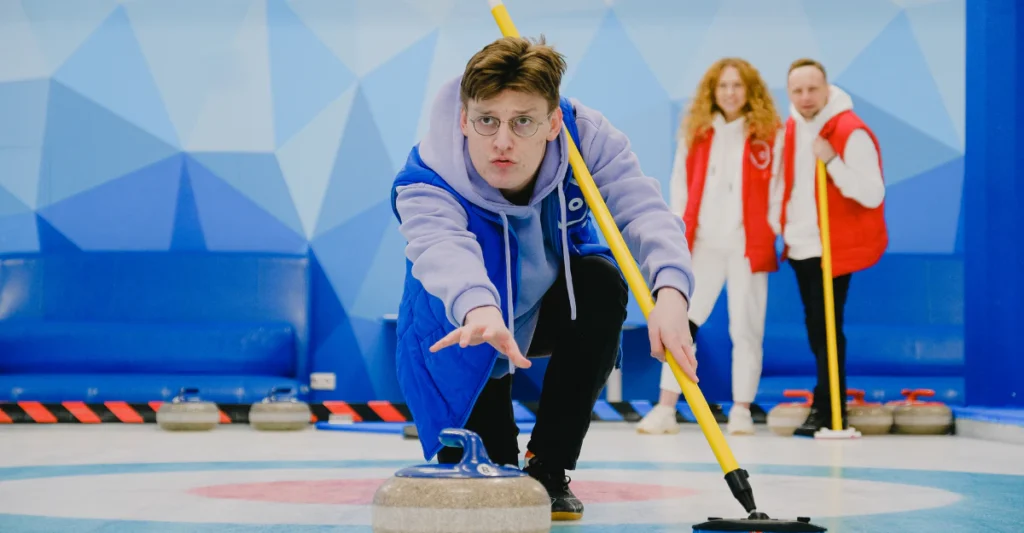
So what is a curling stone made of, and why not just use regular rock or concrete? Because ordinary stone can’t take the punishment. Every shot ends in a collision, one 42-pound rock smashing into another at speed, over and over, for the entire life of the stone. Concrete would crack. Most granite would chip or splinter after a few seasons. Curling stones need something far denser and more consistent.
That’s why competition stones come from just two places on Earth: Ailsa Craig, a small uninhabited island off the coast of Scotland, and the Trefor Granite Quarry in North Wales. Both produce an unusually fine, tightly packed granite formed roughly 60 million years ago, dense enough to survive thousands of impacts without breaking down.
Kays Scotland has been shaping that granite into curling stones since 1851, and it’s the only manufacturer trusted to supply Olympic competition, including all 128 stones used at the Milano Cortina 2026 Winter Olympics.
The stone itself is built in two parts, not one solid block. The main body is Ailsa Craig Common Green Granite, chosen because it absorbs shock well and barely transfers heat, so it won’t sweat and refreeze into a rough surface mid-game. Fitted into the bottom is a separate ring called an “Ailsert,” made from Ailsa Craig Blue Hone Granite. Blue Hone has an incredibly tight molecular structure, almost waterproof, which stops melting ice from seeping into the stone, freezing, and cracking it from the inside out.
That combination, tough body and sealed running edge, is why one properly made stone can last for decades of competitive play.
How Much Does a Curling Stone Weigh and Cost in 2026?
A curling stone isn’t just a rock. It’s a hand finished piece of rare granite, cut to strict tolerances, polished to a precise curve, and built to survive decades of hard impacts. That’s why a single stone can cost more than most kitchen appliances, and it answers the real question behind how much does a curling stone weigh and cost: the weight is fixed by rule, but the price swings hard depending on granite source, insert type, and whether it’s new or reconditioned.
Three things drive the cost up. First, access to the granite itself is limited to two quarries on the planet, and shipping rock off an uninhabited Scottish island isn’t cheap. Second, each stone is shaped and polished by hand to meet exact weight and curve specifications, not mass produced on a line. Third, a well made stone can stay in play for 50 years or more with periodic reconditioning, so the price reflects a piece of equipment built to outlast the curler using it.
Here’s how weight and olympic curling stone price compare across the market in 2026:
| Stone Type | Weight | Price (USD) |
| Single Olympic-Certified Stone | 42 lbs (19.1 kg) | $600 – $1,300+ |
| Full Olympic Set (16 Stones) | 672 lbs (304.8 kg) | $9,600 – $12,000+ |
| New Club Set of 16 (Trefor Granite, Blue Hone Inserts) | 672 lbs (304.8 kg) | ~15,500(~21,000 CAD) |
| LiteRock Junior Set (16 Stones) | 400 lbs total (25 lbs each) | ~3,500(~4,800 CAD) |
| Used / Refurbished Club Stone | 38–44 lbs | $200 – $450 per stone |
So how much does a curling stone cost at the low end versus the high end? A single refurbished club stone can run as little as $200, while a new Olympic-grade rock tops $1,300, roughly a six-fold difference for the same 42 pounds of granite.
Do Curlers Actually Lift the 42-Pound Stone?
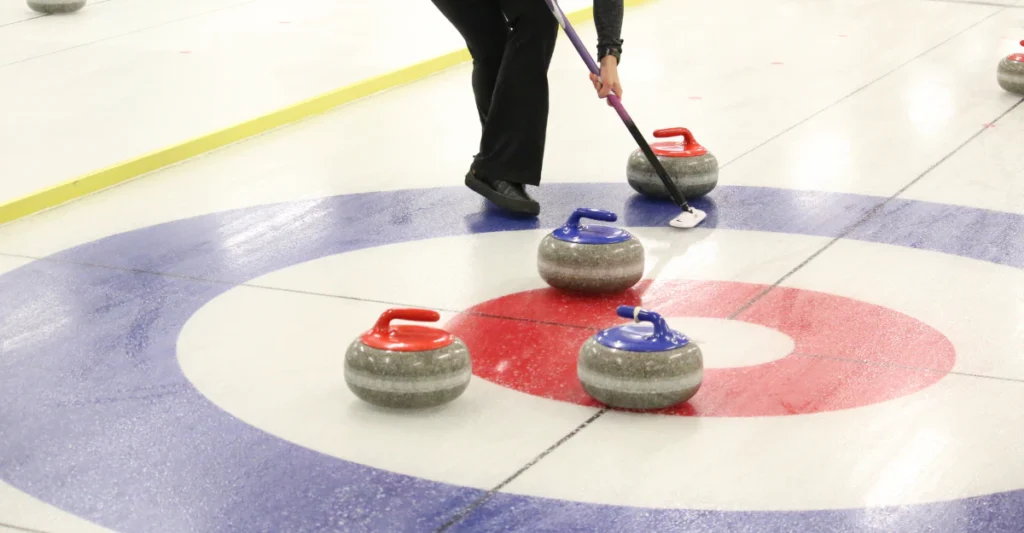
No, and this is the number one worry that stops new curlers from ever trying the sport. The stone never leaves the ice. Curlers don’t pick it up, carry it, or muscle it into position. They crouch down, grip the handle, and slide it forward along the surface.
That’s possible because of how the bottom of the stone is shaped. It’s slightly concave, like an upside-down bowl, so almost none of the granite actually touches the ice. Only a thin ring called the running band, about 5 inches across and just 0.2 to 0.3 inches wide, makes contact.
Sweeping helps too. It briefly warms the ice just ahead of the stone, creating a tiny film of water that cuts friction even further.
Between the narrow contact ring and a quick sweep, moving 42 pounds across the ice takes far less strength than it sounds like it should. Most new curlers are surprised how easy that first push feels.
Frequently Asked Questions About Curling Stone Weight
How much does a curling stone weigh in kg?
A regulation curling stone weighs between 17.24 and 19.96 kilograms, with most Olympic and competition stones sitting right around 19.1 kg. That range covers the full stone, granite body plus handle and bolt, not just the raw rock.
Does the 44-pound weight limit include the handle?
Yes. World Curling’s Rule R2a measures the complete stone, including the plastic handle, steel bolt, and washer, not the bare granite alone. The granite body by itself typically weighs 38 to 41 pounds, with the hardware adding the rest.
How much do all 16 curling stones weigh together?
A full sheet uses 16 stones, 8 with red handles and 8 with yellow, and at an average of 42 pounds each, that adds up to 672 pounds total. That’s roughly the weight of a small motorcycle, spread across sixteen separate rocks.
Why don’t curling stones crack when they crash into each other?
They’re cut from unusually dense, tightly packed granite that can absorb repeated hard impacts without chipping or splintering. The sealed “Ailsert” running edge also keeps water from seeping in, freezing, and cracking the stone from the inside.
Curling stones look like simple slabs of rock, but every pound and every inch is locked down by decades of rule making and quarry science. Next time you watch one glide down the ice, you’ll know exactly what it weighs, what it’s made of, and why it costs what it does.