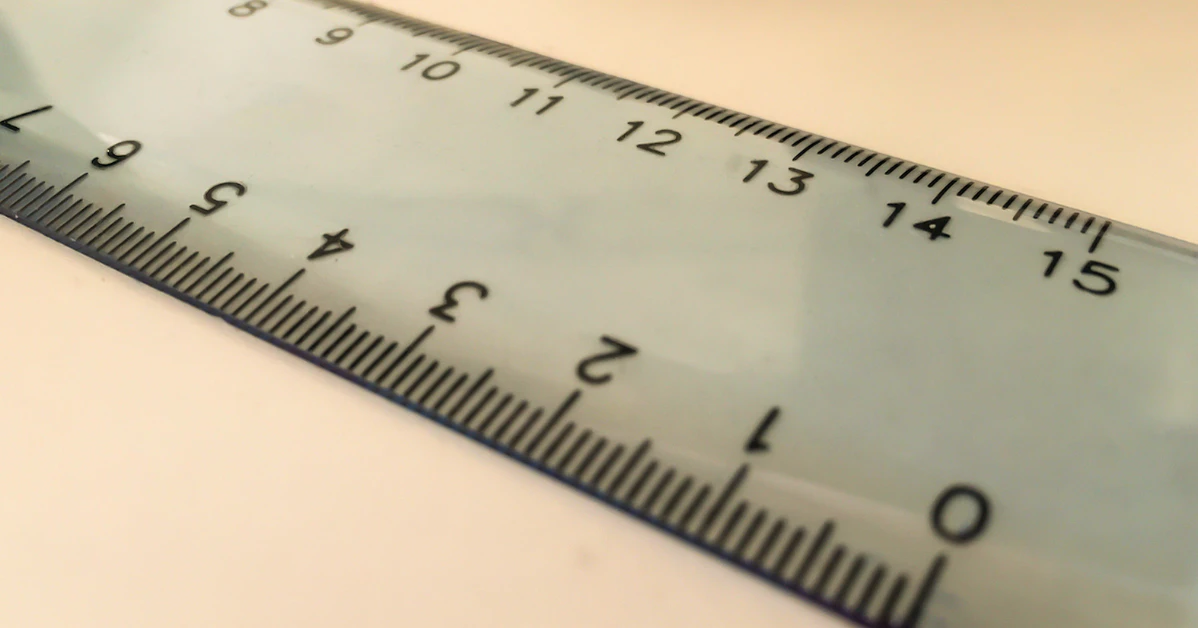
3 cm equals 1.1811 inches. That is roughly 1.18 inches, or just under 1 and 1/4 inches. In millimeters, 3 cm is 30 mm.
If you have ever asked yourself how long is 3 cm, you are not alone. Product listings, school projects, and craft guides often use metric sizes, and most US homes do not keep a metric ruler handy. This guide gives you the number fast, then shows you real objects you can use to see the size.
The Quick Answer: What is 3 cm in Inches?
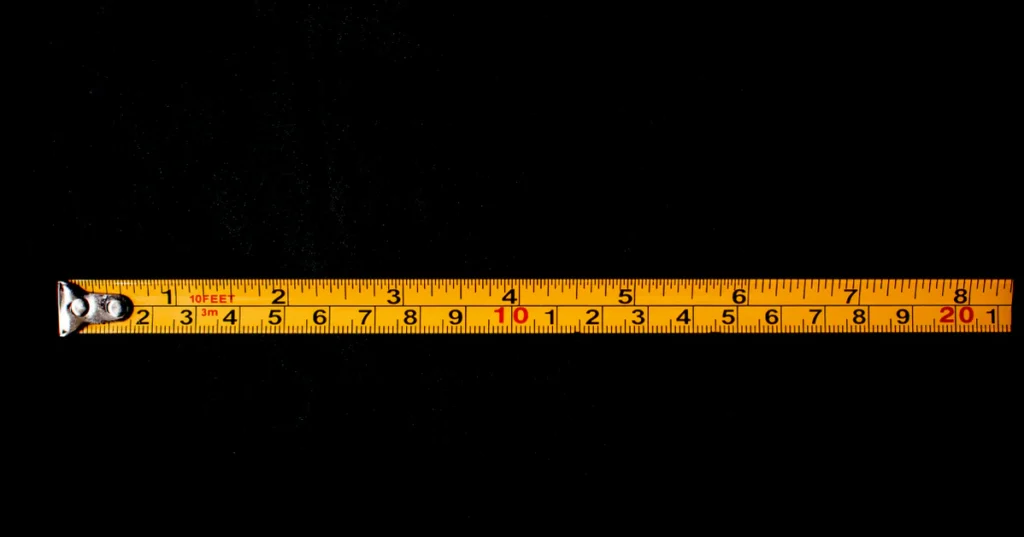
The math is simple. One inch equals 2.54 centimeters. To change centimeters into inches, divide by 2.54.
So 3 divided by 2.54 gives you 1.1811 inches. Most people round that to 1.18 inches. For a quick guess while shopping, think of it as a bit more than 1 inch.
| Unit | Value |
| Centimeters | 3 cm |
| Millimeters | 30 mm |
| Inches (decimal) | 1.1811 in |
| Inches (rounded) | 1.18 in |
| Inches (fraction) | Just under 1 1/4 in |
Many shoppers mix up centimeters and millimeters. A millimeter is one tenth of a centimeter, so 3 cm and 30 mm describe the exact same length. If a product page lists 30 mm, you are looking at the same size.
Think of the number in two steps. First, remember that 3 cm is a little over 1 inch. Second, remember that it is a little under 1 and 1/4 inches. Holding both ideas in your head keeps you from buying something too small or too large.
Next, let’s look at everyday US objects that match this size so you can see it for yourself.
7 Everyday Objects That Are Exactly (or Almost) 3 Centimeters
You do not need a ruler to see this size. Your desk, your wallet, and your medicine cabinet likely hold a few good matches. Here are the first four, starting with the most reliable one.
A US Half Dollar Coin
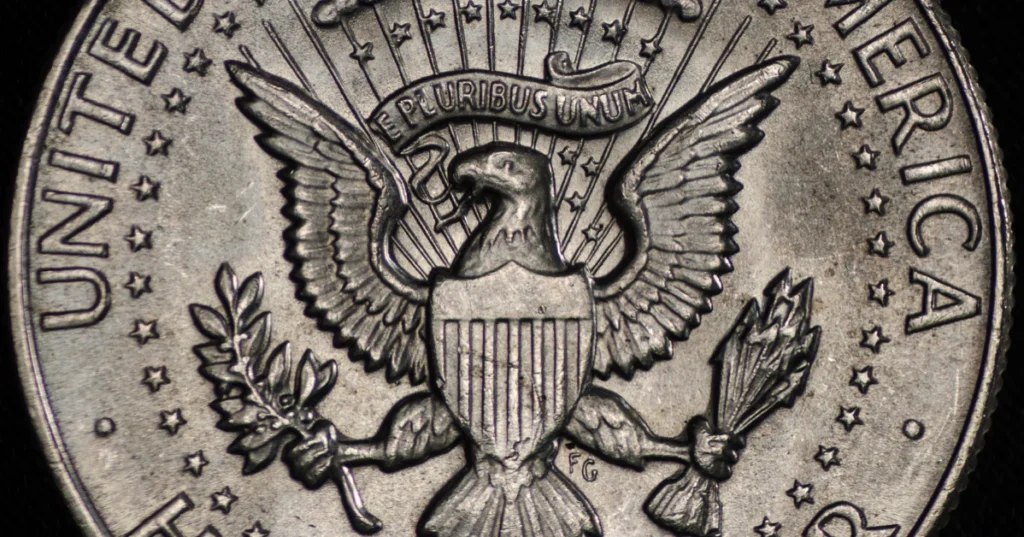
The US Half Dollar is the best match on this list. A standard Kennedy Half Dollar measures 30.61 mm across, which is about 1.2 inches. That is only 0.61 mm wider than 3 cm, so the difference is too small to notice by eye.
Coins make great measuring tools because the US Mint produces them to exact specifications. A bottle cap can change from brand to brand. A Half Dollar never does. You can confirm the details on the US Mint Half Dollar page.
Its round, flat shape also makes it easy to line up against a screen or a printed photo.
- Diameter: 30.61 mm (1.205 inches)
- Gap from 3 cm: about 0.6 mm
- Best for: checking the width of a button, sticker, or sewing patch
Half Dollars are rare in wallets today. Many banks can get you one if you ask at the counter.
A Standard SD Memory Card
A full-size SD card is 32 mm long, which equals 3.2 cm. That makes it just 2 mm longer than 3 cm, a small gap you can barely see.
SD cards follow a universal standard, so a card from any brand has the same size. That makes it a dependable reference if you own a camera, a gaming handheld, or a dash cam. Details on card sizes are available from the SD Association.
- Length: 32 mm (3.2 cm, or about 1.26 inches)
- Width: 24 mm (2.4 cm)
- Best for: measuring length, like a small charm or a zipper pull
Hold the card next to the item you are measuring. If the item looks a little shorter than the card, it is close to 3 cm.
The Length of a Standard Push Pin
A standard office push pin is often right around 3 cm from the flat head to the metal tip. That is about 1.18 inches. Some brands run closer to 1 inch, and others stretch to 1.2 inches.
Because brands differ, treat a push pin as a handy estimate, not an exact tool. It works well when you only need a rough picture of the size. Most desks, corkboards, and junk drawers have a few.
- Typical length: about 3 cm (1 to 1.2 inches)
- Accuracy: good for estimates
- Best for: school projects and bulletin board layouts
For a better check, lay the pin next to a Half Dollar. If the pin is a little longer than the coin, you have a close match.
Two Standard Aspirin Pills Side-by-Side
Two aspirin tablets lined up side by side make a quick 3 cm. Many standard tablets measure about 1.5 cm across, and 1.5 plus 1.5 gives you 3.
Sizes change by brand and strength, so check yours. Low-dose tablets are smaller and will not work for this trick. If your pills are a different size, skip this one and use a coin instead.
Treat this as a visual guide only. Keep loose pills away from kids and pets while you measure.
- Per tablet: about 1.5 cm (0.59 inches)
- Two tablets: about 3 cm (1.18 inches)
- Best for: a fast check when no tools are nearby
These four cover most homes. Keep the Half Dollar or SD card as your main reference, and use the push pin and aspirin as backups. The next three objects add more options.
The Top of a Golf Tee
The cup at the top of a standard wooden golf tee is roughly 1.18 inches across, which matches 3 cm. This one surprises many people, since most of us think of a tee as a long, thin peg.
Forget the length of the tee. Only the cup counts here. Hold the tee upright and look straight down at the flat, curved top. Then measure from one outer edge of the cup to the opposite edge, passing through the middle.
Wooden tees vary a little by brand and style, so treat this as a close estimate. Plastic tees often use different cup shapes, so stick with a basic wooden one for the best result.
- Part to measure: the cup, edge to edge
- Approximate width: 3 cm (1.18 inches)
- Best for: checking the size of a round sticker, button, or bead
If you play golf or know someone who does, a spare tee is easy to find. Keep one in a toolbox or craft drawer.
A Standard Metal Paperclip
A small metal paperclip usually runs between 1.12 and 1.2 inches long. That puts it very close to 3 cm, which is 1.18 inches. Of all the items on this list, it is the one most people already have within arm’s reach.
To use it, lay the clip flat on a table with the long side facing you. Measure along the outside, from the far end of the outer loop to the far end of the other. Do not bend or stretch the wire, since that changes the length.
Sizes can differ. Jumbo clips are far longer, and some brands make tiny ones. Look for the common small silver clip, the kind that holds a few pages together.
- Typical length: 1.12 to 1.2 inches (about 2.8 to 3 cm)
- Accuracy: good, though brands vary
- Best for: a quick check on a desk or at the kitchen table
Put the paperclip beside a Half Dollar to test it. If they line up closely, you have a reliable small clip.
A Standard Guitar Pick
A standard guitar pick is around 30 mm tall, which is exactly 3 cm. That makes it one of the neatest matches here, especially for anyone who plays music or lives with a musician.
The trick is in how you look at it. Hold the pick with the rounded point facing down. Measure straight from the very top edge to the tip of the point. Do not measure across the widest part, because that side is a bit shorter on many picks.
Not every pick is the same. Jazz picks are smaller, and some novelty picks are oversized. The classic teardrop shape, often called a 351 shape, is the one that fits this size best.
- Part to measure: top edge to bottom tip
- Approximate height: 30 mm (3 cm, or 1.18 inches)
- Best for: judging the height of a charm, pendant, or small tag
Picks are light and flat, so they slide easily next to a screen or a printed photo. You can also buy a bag of them for a few dollars if you want a handy reference tool.
With all seven objects in hand, you can pick the one that is closest to where you are right now. A coin or an SD card gives the best accuracy, while a paperclip or push pin works in a pinch.
How to Measure 3 cm Without a Ruler
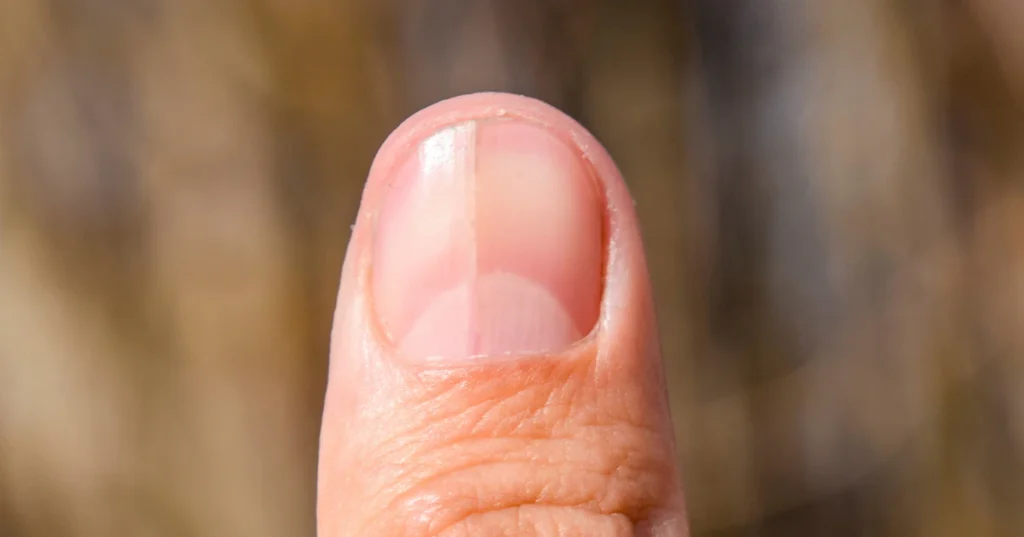
If none of the seven objects are nearby, your own hand and a few coins can do the job. Here is how to measure 3 cm using things you always have with you.
The Thumb Trick
For many adults, the width of the thumb at the first knuckle is about 1 inch, or 2.54 cm. That is a handy starting point, but you need a little more to reach 3 cm.
Here is how to do it:
- Press your thumb flat on the surface you are measuring.
- Mark the edge of the thumb at the knuckle.
- Add a small gap past that mark, about the width of a pencil tip.
That extra sliver brings you from 2.54 cm up to 3 cm. The gap should be roughly half a centimeter.
Thumbs differ from person to person, so this is an estimate. Test yours once against a Half Dollar or an SD card. After that, you will know how your own thumb compares and can trust it the next time.
The Coin Stacking Method
Coins give you a more reliable result than body parts. The US Half Dollar is 30.61 mm wide, so a single coin is your 3 cm marker. If you do not have one, you can build the length from smaller coins by laying them in a row.
Lay the coins edge to edge in a straight line, not stacked on top of each other. Stacking measures height, and that is a different thing. Keep the coins touching without overlap, then compare the row to your item.
Check the US Mint for exact coin sizes before you rely on any combination. A row of coins only works when you know each width, so use published numbers, not guesses. Pairing the coin row with the SD card trick from earlier gives you a second check.
- Best coin: US Half Dollar, 30.61 mm
- Tip: keep coins flat and touching
- Check: compare against the SD card length of 32 mm
3 Centimeters vs. Millimeters: A Quick Breakdown
Centimeters and millimeters often get mixed up. The rule is easy. One centimeter equals 10 millimeters, and one inch equals 25.4 millimeters.
The table below answers the most common questions about 1 cm, 2 cm, and 3 cm in one place.
| Centimeters | Millimeters | Inches (decimal) | Inches (nearest fraction) |
| 1 cm | 10 mm | 0.3937 in | Just over 3/8 in |
| 2 cm | 20 mm | 0.7874 in | Just over 3/4 in |
| 3 cm | 30 mm | 1.1811 in | Just under 1 1/4 in |
Notice the pattern. Each extra centimeter adds 10 mm and about 0.39 inches. That makes it simple to scale up or down in your head.
For quick shopping math, remember that 3 cm is 30 mm. If a listing shows 30 mm, it matches 3 cm exactly. That small fact saves many people from ordering the wrong size.
Why Knowing 3 cm Matters in Everyday Life

A small number can make a big difference. Three centimeters shows up in more places than most people expect, and a quick mental picture saves time, money, and stress.
Online shopping. Listings from overseas sellers often use metric sizes only. A phone ring, a jewelry charm, or a pair of earrings listed at 3 cm is a bit longer than an inch. Knowing that keeps you from ordering a piece that turns out too small or too bulky.
Crafting and DIY. Sewing patterns, bead kits, and scrapbook templates often call for 3 cm cuts or gaps. A Half Dollar or SD card on your table lets you check a measurement without hunting for a metric ruler.
Checking medical spots. Doctors often describe a mole, bump, or cyst in centimeters. A reading of 3 cm gives you a clear picture of its size, which helps when you track changes over time. This guide is for general sizing only and does not replace a doctor. Size alone does not tell you if something is harmful, so have a medical professional check anything that is new, growing, or changing.
Frequently Asked Questions
Is 3 centimeters longer than 1 inch?
Yes. 3 cm is about 1.18 inches, which is a little longer than 1 inch.
One inch equals 2.54 cm, so 3 cm passes it by about 0.46 cm. That is roughly the width of a pencil eraser. It still falls just short of 1 and 1/4 inches.
What is 3 cm visually?
3 cm is about the width of a US Half Dollar, the length of a standard SD card, or the height of a guitar pick.
A Half Dollar measures 30.61 mm across, which makes it the closest match. An SD card runs 32 mm long, so it is a touch bigger. Both are standard sizes, so they give the same result every time.
Smaller helpers include a small paperclip, a push pin, and the cup of a wooden golf tee. Pick whichever one is closest to you.
How big is a 3 cm cyst or mole?
A 3 cm cyst or mole is about as wide as a US Half Dollar or a large grape.
Think of a coin pressed flat against the skin. A grape works too, though grapes vary by type, so a Half Dollar is the steadier comparison. Either way, 3 cm is larger than a pea and smaller than a golf ball.
That size is easy to spot and worth showing to a doctor. Do not try to measure a spot with a loose guess if your health is the concern. A clinic can measure it exactly and keep a record.
Final Thoughts
Three centimeters is 1.1811 inches, or 30 mm. Once you have that number, the rest comes down to practice.
Start with the Half Dollar. It is the most accurate reference in this guide, since the US Mint makes every coin to the same size. The SD card comes second, and the rest work well for quick checks around the house.
When you have no objects nearby, use the thumb trick. Remember that your thumb is close to an inch, so add a small gap to reach 3 cm. Test it once against a coin, and you will know your own measurement for good.
The conversion table helps too. Each centimeter adds 10 mm and about 0.39 inches, so you can scale up or down without a calculator.
Next time a product page, a craft pattern, or a doctor’s note uses centimeters, you will already know what size to expect. Save this page, and keep a Half Dollar or SD card in your desk drawer for the moments when a quick check matters.