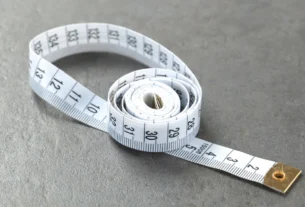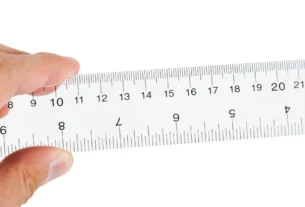
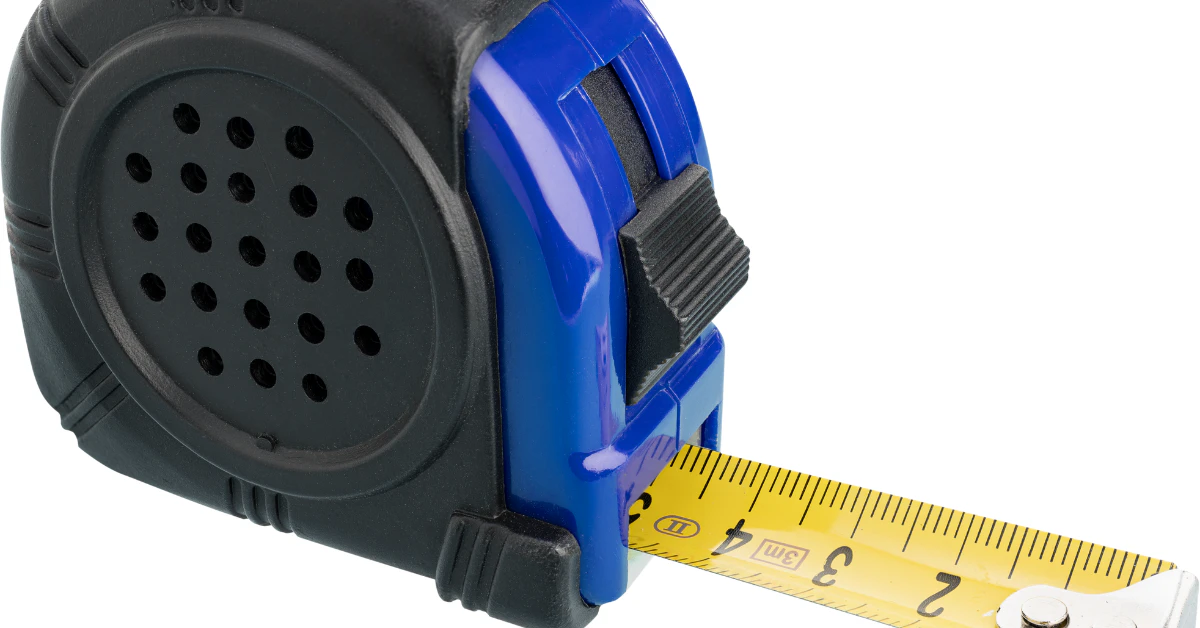
50 cm equals 19.685 inches, or about 1.64 feet. That is half a meter, or 500 millimeters.
So, how long is 50 cm in real life? It is just a little shorter than 20 inches. On a standard US tape measure, that lands at about 19 11/16 inches, just shy of 19 ¾ inches.
Here is an easy way to see it. A standard throw pillow on your couch is 20 x 20 inches, so each side is only a hair longer than 50 cm. An average US newborn baby is about 20 inches long too.
Shopping online for a rug, shelf, or curtain rod? Many listings use metric sizes, and decimals like 19.685 are hard to find on a ruler. The official conversion rules come from the National Institute of Standards and Technology (NIST).
Here is a fun fact for quick math. Since 50 cm is exactly half a meter, you can double it to get 100 cm, or one full meter.
In this guide, you will get quick comparisons with everyday items, a simple conversion table, and ways to measure 50 cm without a tape measure. Let’s make this size easy to picture.
Quick Conversion: 50 cm in Inches and Feet
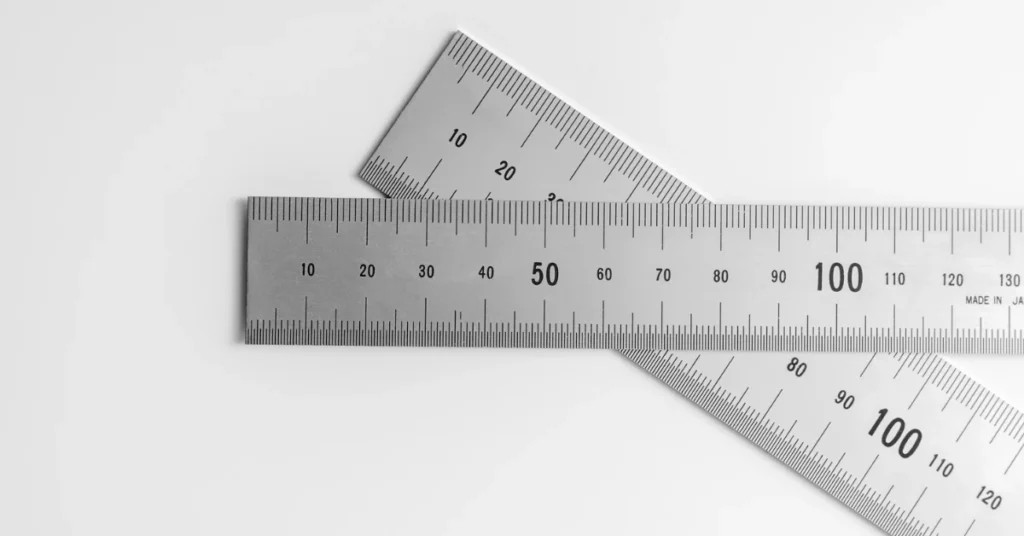
Here is the exact answer. 50 cm equals 19.685 inches, and the math is simple. One inch is 2.54 cm, so you divide 50 by 2.54. That gives you 19.685 inches.
Here are all the conversions in one place:
- Inches: 50 cm = 19.685 inches
- Feet: 50 cm = 1.64 feet
- Feet and inches: 50 cm = 1 foot and 7.68 inches
- Millimeters: 50 cm = 500 mm
- Meters: 50 cm = 0.5 meters (exactly half a meter)
How to Find 19.68 Inches on a Tape Measure
Most US tape measures do not show decimals. They use fractions instead, so 19.685 can look confusing.
Here is the trick. The number 19.685 is close to 19 and 11/16 inches. That is just shy of 19 ¾ inches.
To find it on your tape measure, follow these steps:
- Find the 19-inch mark.
- Look at the small lines after it. Each tiny line is 1/16 of an inch.
- Count 11 of those tiny lines past 19 inches.
- Stop one tiny line before the 19 ¾ mark.
That spot is your 50 cm. It is a very small gap, so for most home projects, 19 ¾ inches is close enough.
Why the Feet Number Looks Odd
The 1.64 feet answer can trip people up. It does not mean 1 foot and 64 inches. It means one full foot (12 inches) plus 0.64 of another foot. That works out to 7.68 inches, so 50 cm is 1 foot and 7.68 inches.
What Does 50 cm Look Like? 10 Everyday Objects

Numbers on a ruler only help so much. It is easier to understand 50 cm when you compare it to things you already know. Since 50 cm is about 20 inches, these ten everyday items give you a quick mental picture.
An Average Newborn Baby
The average US newborn is about 20 inches long, which is roughly 50.8 cm. That is just a hair over 50 cm. If you have ever held a baby, you already know this size. Head to toe, a newborn is close to half a meter long.
A Standard Decorative Throw Pillow
Look at the couch in your living room. The most common throw pillow size is 20 x 20 inches. Each side is only a little longer than 50 cm. If you shop for pillow covers online, a 50 cm listing is a near match for this size.
Two 10-Inch Dinner Plates Side by Side
Grab two standard dinner plates from your cabinet. Most are about 10 inches across. Set them next to each other and the pair measures about 20 inches. That is a handy way to check 50 cm right at the kitchen table.
A Standard 20-Inch Computer Monitor
Monitor sizes are measured corner to corner. A 20-inch screen measures exactly 50.8 cm along that diagonal. So if someone says a screen is 50 cm, think of a small desktop monitor. It is the same length as the line from one corner to the opposite corner.
A Standard Microwave Oven
Many countertop microwaves are around 20 inches wide. Sizes vary by brand, so measure yours to be sure. Still, a typical microwave is a great real-life guide. If you can picture its width, you can picture 50 cm.
A Standard Rolling Pin
Most rolling pins are 18 to 20 inches long, handles included. A 20-inch pin is almost exactly 50 cm. If baking is your thing, grab yours from the drawer. It is a quick, handy measuring stick.
Four Standard iPhones Lined Up
Most iPhones are about 5 to 6 inches tall. Line up four of them end to end and you get roughly 20 inches or a bit more. That puts the total close to 50 cm. It is a fun trick when no tape measure is nearby.
A 20-Inch BMX Bike Wheel
BMX bikes are known for their 20-inch wheels. That number is the wheel’s diameter, so the distance across the tire is about 50.8 cm. Picture a kid’s BMX bike. The wheel is nearly the same as half a meter from edge to edge.
A Standard Carry-On Luggage Height
Carry-on bags are often 20 to 22 inches tall. A 20-inch carry-on is almost exactly 50 cm. Airlines often allow up to 22 inches, so a 50 cm bag fits well within most limits. Check your airline’s rules before you fly.
Two Standard US Letter Papers
A US Letter sheet is 8.5 by 11 inches. Place two sheets end to end along the long edge and you get 22 inches. That is a bit longer than 50 cm, so it works as a quick upper limit. Lay two sheets on a desk and you can see the size right away.
How to Measure 50 cm Without a Ruler
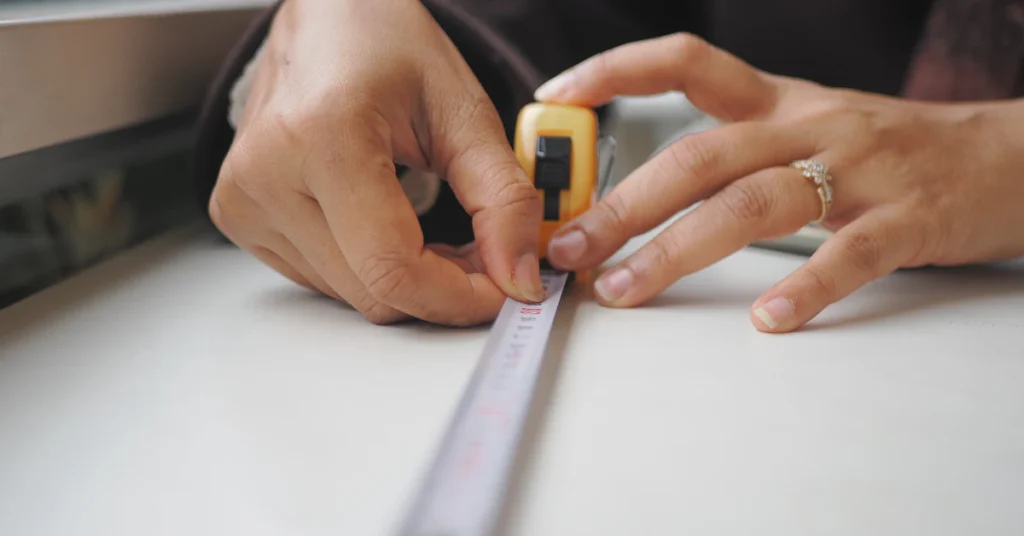
No tape measure nearby? You can still get close to 50 cm, which is about 19.7 inches, with things you already have. These tricks are not perfect, but they work well for quick shopping and small home projects.
Body Hacks
- Elbow to fingertips: On an adult man, the distance from the bent elbow to the tip of the middle finger is about 18 inches. This old measure is called a cubit. Add roughly 2 inches and you land near 20 inches, or 50 cm.
- Two shoes: A men’s size 10 shoe is close to 10 inches long on the inside. Set two end to end and you get about 20 inches. Brands differ, so use this as a rough guide.
- Your own arm: Measure your forearm once with a real tape, then remember the number. After that, your arm becomes a handy ruler you carry everywhere.
Household Hacks
- Letter paper: A sheet is 11 inches long and 8.5 inches wide. Place one long edge and one short edge end to end for 19.5 inches. That is less than a quarter inch short of 50 cm.
- Credit cards: Each card is about 3.4 inches wide. Line up six in a row for roughly 20 inches, a hair over 50 cm.
- Soda cans: A standard 12-ounce can stands about 4.8 inches tall. Stack or line up four and you reach about 19.3 inches. That is a little under 50 cm.
- Yardstick: If you own one, find the 19 ¾ inch point. This is the closest mark to 50 cm.
Tips for Better Accuracy
- Use string: Lay a piece of string along your chosen objects, then pinch the end. You can carry that length to a store and hold it up to a product.
- Mark it on paper: Fold a strip of paper to the length you measured and draw a line at each end. It works like a homemade ruler.
- Check twice: Count your objects again before you trust the result. A missed card or can adds up fast.
- Round with care: For pillows, picture frames, or décor, 19 ¾ inches is usually close enough. For furniture, flooring, or anything you plan to cut, use a real tape measure.
Most of these tricks land within an inch of 50 cm. That is plenty for deciding whether a shelf, rug, or storage bin will fit. When a few millimeters matter, take a quick measurement with a proper tool.
50 cm in the Real World: Why It Matters for Online Shopping

Online shopping has no borders, but sizes still do. Many products on IKEA, Amazon, and other global stores list their size in centimeters first. If you grew up with inches, a number like 50 cm can leave you guessing. That is why a quick conversion helps.
Where You Will See 50 cm
These are common items sold in 50 cm sizes:
- Pillow covers: 50×50 cm covers are very popular. That is about 19.7 x 19.7 inches, so they fit a standard 20 x 20 inch pillow insert snugly, which gives a full, plump look.
- Necklaces: A 50 cm chain is about 20 inches. It rests below the collarbone on many people.
- LED light strips: Short strips often come in 50 cm lengths. They work well under a shelf or inside a cabinet.
- Canvas art: A 50×50 cm canvas is about 19.7 inches square, a good size for a bedroom or office wall.
Why a Small Gap Can Be a Big Deal
The difference between 19.7 and 20 inches looks tiny on paper. Still, it can matter. A cabinet shelf, a picture ledge, or a drawer may have very little extra room. A fraction of an inch can decide whether an item fits.
A Simple Shopping Tip
Before you click buy, convert the number and measure your space. Remember that 50 cm is about 19 ¾ inches. Round down when you check for fit, not up. Also read the product photos and the size chart, since some sellers list sizes with a small margin of error.
For US shoppers, knowing this size saves time and returns. Keep the 20-inch comparison in mind, and metric listings will feel much easier to read.
Centimeters vs. Inches: Conversion Table Near 50 cm
50 cm is a common benchmark for furniture, décor, and jewelry. Still, products are not always exactly that size. A shelf might be 48 cm, or a frame might be 52 cm. This table shows the sizes just below and above 50 cm, so you can check a listing fast. Each inch value comes from the rule that 1 cm equals about 0.3937 inches.
Conversion Table: 45 cm to 55 cm
| Centimeters (cm) | Inches (decimal) | Inches (nearest 1/16) |
| 45 cm | 17.717 in | 17 11/16 in |
| 46 cm | 18.110 in | 18 1/8 in |
| 47 cm | 18.504 in | 18 1/2 in |
| 48 cm | 18.898 in | 18 7/8 in |
| 49 cm | 19.291 in | 19 5/16 in |
| 50 cm | 19.685 in | 19 11/16 in |
| 51 cm | 20.079 in | 20 1/16 in |
| 52 cm | 20.472 in | 20 1/2 in |
| 53 cm | 20.866 in | 20 7/8 in |
| 54 cm | 21.260 in | 21 1/4 in |
| 55 cm | 21.654 in | 21 5/8 in |
How to Read the Table
The middle column gives the exact decimal. The last column gives the closest 1/16 inch fraction, which is what you will see on a US tape measure. Fractions are rounded, so they may be off by a tiny amount.
A Quick Math Shortcut
Need a number that is not on the list? Multiply the centimeters by 0.3937. For 50 cm, that is 50 x 0.3937 = 19.685 inches. You can also add about 0.394 inches for each extra centimeter above 50. So 53 cm is 19.685 plus about 1.18, which is 20.87 inches.
Every 1 cm step adds about 0.4 inches, or a little less than half an inch.
Frequently Asked Questions
Is 50 cm exactly half a meter?
Yes. One meter has 100 centimeters, so 50 cm is exactly half a meter, or 0.5 meters. Many people ask this because the numbers look small, but the math is simple. Cut a meter in half and you get 50 cm.
How many feet is 50 cm?
50 cm equals about 1.64 feet. That is the same as 1 foot and 7.68 inches. The decimal part is not inches, so 0.64 feet means a little more than half of another foot.
Is 50 cm bigger than 19 inches?
Yes. 50 cm equals 19.685 inches, so it is longer than 19 inches by about two thirds of an inch. It is also just shy of 19 ¾ inches, which makes it a good round number to use at a store or on a job.
How many millimeters equal 50 cm?
50 cm equals 500 millimeters. Each centimeter has 10 millimeters, so you multiply 50 by 10.
If you want the quick version, remember that 50 cm is half a meter, about 20 inches, and a little less than 2 feet.
Final Thoughts
So, how long is 50 cm? It is 19.685 inches, or about 1.64 feet. Think of a newborn baby, a 20 x 20 inch throw pillow, or a 20-inch BMX wheel, and you will have a clear picture in seconds.
The next time a product listing shows a metric size, you will know what to do. Convert the number, round down to 19 ¾ inches, and check your space. With the conversion table and the no-ruler tricks in this guide, shopping across borders gets much easier. Bookmark this page and come back whenever a measurement leaves you stuck.